Mirror guide
Mirror Desilvering: Why It Happens and What You Can Do
 By Joan Bardot · Updated 3 sources cited
As an Amazon Associate I earn from qualifying purchases. How I choose products.
On this page
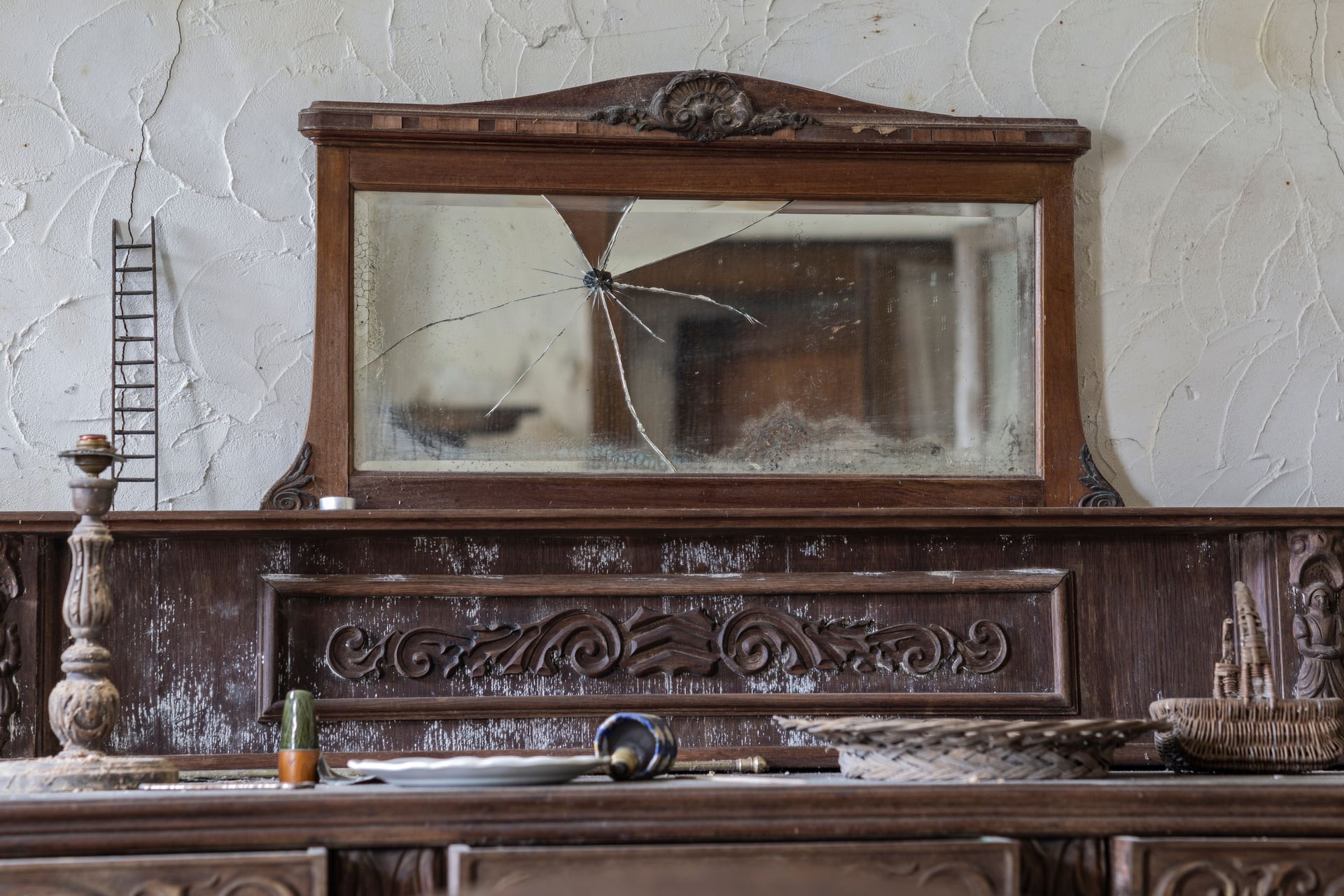
Mirror desilvering is the dark creep you see at the edges of an old bathroom mirror, or the cloudy grey and black spots that bloom across the back of an antique. It looks like dirt, but no amount of cleaning will shift it, because it isn't on the glass at all: it is the reflective layer behind the glass breaking down.
In this guide I explain how a mirror is built and why that layer fails, how to tell desilvering from dirt or scratches, how to stop it getting worse, and the realistic ways to deal with it, from a frame that hides the edges to replacing the mirror. If you are already shopping for a replacement, my picks for the best bathroom wall mirrors and the best decorative mirrors are a good place to start.
What Mirror Desilvering Is
How a Household Mirror Is Built
According to the Wikipedia article on silvering, household mirrors are "back-silvered": light passes through the glass to a reflective layer on the back, which is usually covered by a protective paint. Silver layers may also get a layer of copper for long-term durability. The silver itself is deposited chemically, by a reaction that reduces a silver solution to metallic silver on the glass, a method Justus von Liebig developed in 1835.
Why the Silver Fails
Silver is a reactive metal. The same article notes that it oxidizes and absorbs sulfur from the air to form a dark tarnish with low reflectivity. The backing paint is there to keep air, water and chemicals away from it. Desilvering starts wherever that protection is breached, and the dark patches you see from the front are tarnished or corroded silver.
"Black Edge": the Most Common Form
The National Glass Association's mirror care bulletin, FB06-05, names the most common form: getting the edges of a mirror wet "can result in damage to the mirror edges, commonly called 'black edge'". The edge of a mirror is where the silver is most exposed, especially after cutting, so that is where the dark band usually starts and slowly creeps inward.
What Causes Mirror Desilvering
Most desilvering I see on bathroom mirrors comes down to a handful of causes. The NGA bulletin covers most of them.
Moisture at the Edges
Bathroom steam, splashes from the sink and cleaning water all find the edges. The NGA's advice is to avoid getting the edges of a mirror wet "with any liquid or substance" and, if they do get wet, to dry them off immediately. A mirror sitting on a wet backsplash or right next to a shower is in the worst possible spot.
The Wrong Cleaners
The bulletin is direct: don't use acid or alkali cleaners, because either can attack the front surface, the edges and the backing; don't use mirror cleaners containing ammonia or vinegar; and don't use solvents, which can attack and damage the edges and backing. It also says to put cleaner on the cloth rather than spraying the mirror, so it doesn't run down into the edges. Years of spraying a vinegar mix straight onto the glass is one of the surest ways to get black edges. My guide to cleaning a mirror without streaks has the safe routine.
Installation Problems
The NGA notes that mirrors should be stored dry, away from heat sources such as steam or water pipes, and installed only once sprayed materials and wall-covering adhesives have fully cured. Fresh edges left unsealed after cutting, or an adhesive that isn't made for mirrors, are other common starting points. If you hang or glue a mirror yourself, use an adhesive sold for mirrors and let everything cure first.
Age
Very old mirrors are a separate case. Wikipedia records that before Liebig's silvering method, European mirrors were commonly backed with a tin-mercury amalgam, used from the 16th century. Antique mirrors develop their own crystallized, spotted look, and they need a specialist rather than DIY: never scrape or sand the back of a mirror you think may be very old.
Desilvering, Dirt or Scratches? How to Tell
| What you see | Clean it with warm water | Look from the back | Likely cause |
|---|---|---|---|
| Dark band creeping in from the edges | No change | Paint lifted or discolored at the edge | Black edge (desilvering) |
| Grey, cloudy or black spots across the face | No change | Spots or bubbles in the backing | Desilvering from the back |
| Hazy film or smears | Disappears | Backing intact | Dirt, soap or cleaner residue |
| Fine lines you can feel with a fingernail | No change | Backing intact | Scratches in the glass face |
| Clear patches where silver is missing, see-through | No change | Silver gone in places | Advanced desilvering |
The Quick Test
Clean a small patch with warm water on a microfiber cloth and dry it. If the mark is still there and you can't feel it on the surface, it is behind the glass. Then, if the mirror isn't glued down, look at the back with a flashlight: lifted, scratched or discolored backing paint over the spot confirms it.
How to Stop Desilvering From Spreading
You can't reverse corrosion that has happened, but you can slow it down a lot.
Protecting a mirror that has started to desilver
-
Change how you clean
Warm water on a well-wrung lint-free cloth, cleaner on the cloth and never on the glass, no ammonia, vinegar, acids or solvents. These are the NGA's recommendations from manufacturers of quality mirrors.
-
Dry the edges every time
Finish every clean, and ideally every steamy shower, by drying the edges and any joints between mirror panels. The NGA's final cleaning step is to make sure all joints and edges are dry.
-
Improve the ventilation
Run the bathroom fan during and after showers so the mirror spends less time wet. My guide to the handprint on the mirror after a shower covers fogging and ventilation in detail.
-
Seal exposed edges
If you can reach the edges, clean them, let them dry and apply a mirror edge sealant. On a mirror you have cut yourself, seal the new edge before it goes back up.
-
Move it away from water
A mirror whose bottom edge sits in a splash zone will keep getting wet. Raising it slightly or adding a ledge or frame along the bottom keeps it out of the water.
Mirror Care and Repair Kit
Products for protecting edges, re-mirroring small clear-glass pieces and fixing mirrors safely.
-
1Edge sealant
C.R. Laurence S209 Aerosol Mirror Edge Sealant
An aerosol sealant sold for sealing mirror edges, for freshly cut edges or clean, dry edges that have started to darken.
-
2Mirror spray
Rust-Oleum Mirror Silver Spray Paint
Mirror-finish spray applied to the back of clear glass, for craft pieces and small panels rather than for repairing an existing mirror.
-
3Mirror adhesive
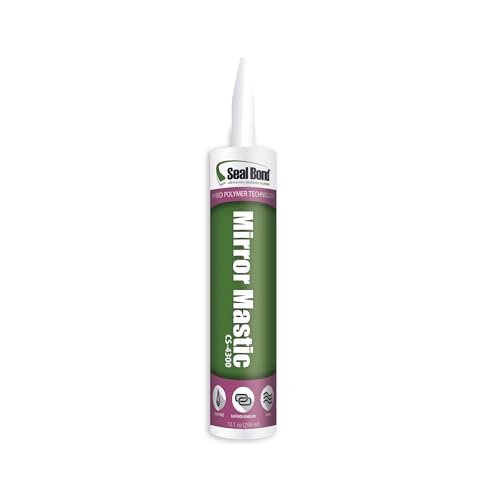
Seal Bond CS-4300 Mirror Adhesive
A low-odor adhesive sold specifically for mirrors, if you are re-fixing a mirror or gluing a frame to one.
-
4Cloths
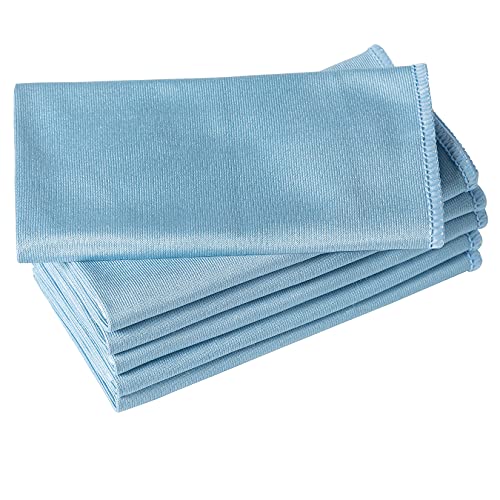
Puomue Microfiber Glass Cleaning Cloths, 6 Pack
Lint-free cloths for the warm-water clean and the dry buff that keep moisture off the edges.


How to Fix a Desilvered Mirror: Your Options
There is no product you can spray on the back of an existing mirror to restore the silver where it has corroded. These are the realistic choices, roughly in order of effort.
| Option | Best for | Result | Effort |
|---|---|---|---|
| Live with it and protect it | Thin black edges on a working mirror | Damage slows; still visible | Low |
| Hide the edges with a frame | Builder mirrors with black edges | Damage hidden; mirror gets a new look | Medium |
| Professional resilvering | Antiques and mirrors with sentimental value | New reflective layer on the original glass | Hand it to a specialist |
| Mirror spray on clear glass | Small decorative pieces, craft projects | Mirror-like, not a true mirror | Medium |
| Replace the mirror | Spreading spots or large damage on an ordinary mirror | Problem gone | Low to medium |
Hide It With a Frame
Black edge starts at the edges, so while the band is still narrow, a frame of trim around a frameless builder mirror can cover it; my guide to framing a bathroom mirror shows how. Make sure the edges are clean and dry before anything goes over them, and use an adhesive sold for mirrors.
Professional Resilvering
A specialist strips the old backing and silver from the glass and applies a new reflective layer and backing, using the same kind of chemical silvering process Wikipedia describes. It makes most sense for antique frames and glass you want to keep. Prices depend on size and the shop, so get quotes; for an antique, ask an antiques specialist first, because new silver changes the character of old glass.
Mirror Spray on Clear Glass
Mirror-effect spray paints are made for clear glass, not for patching a mirror. Rust-Oleum's technical data sheet for its Mirror Effect spray describes applying very thin coats to the back of clean glass, up to five, with the mirror finish showing through from the front. It works well on vases, small panels and craft pieces. On an existing mirror you would first have to strip the old backing completely, and the result is still a paint finish, not a silvered mirror.
Replace the Mirror
For an ordinary bathroom mirror with spreading spots, replacing the glass is usually the most sensible fix. My guide to removing a mirror glued to the wall covers taking the old one down safely, and the best LED bathroom mirrors are worth a look if you want light and a defogger in the replacement.
Choosing a Mirror That Lasts in a Bathroom
Look at the Edges and Backing
A bathroom mirror lives in steam, so the edges matter more than the frame. Polished, sealed edges and an intact backing are what you want. A frame along the bottom edge keeps splashes off the most vulnerable part.
Mount It Clear of Water
Leave a gap between the bottom edge and the backsplash, so water can't sit against it. My guide to vanity mirror height covers how high to hang it.
Keep the Bathroom Dry
Ventilation protects the mirror as much as the paintwork. A fan run during and after showers, and a habit of drying the edges, will add years to any mirror.
Sources
- National Glass Association: Proper Procedures for Cleaning Flat Glass Mirrors (FB06-05, 2019) Wet edges cause "black edge"; no acid, alkali, ammonia, vinegar or solvent cleaners; cleaner on the cloth; dry edges and joints; storage away from steam pipes and installation after adhesives cure.
- Wikipedia: Silvering Back-silvered household mirrors, protective paint and copper layers, chemical silver deposition, Liebig's 1835 method, tin-mercury amalgam mirrors, silver tarnish.
- Rust-Oleum: Mirror Effect technical data sheet (SPC-105) Mirror Effect spray is applied in thin coats to the back of clear glass, with the mirror finish seen from the front.
Keep reading: How to clean a mirror without streaks · Why are mirrors so expensive? · Best bathroom wall mirrors · Best decorative mirrors
The MirroRank letter
New mirror picks, sizing and lighting tips from Joan, about once a month.