Mirror guide
How to Clean a Mirror Without Streaks
 By Joan Bardot · Updated 1 sources cited
As an Amazon Associate I earn from qualifying purchases. How I choose products.
On this page
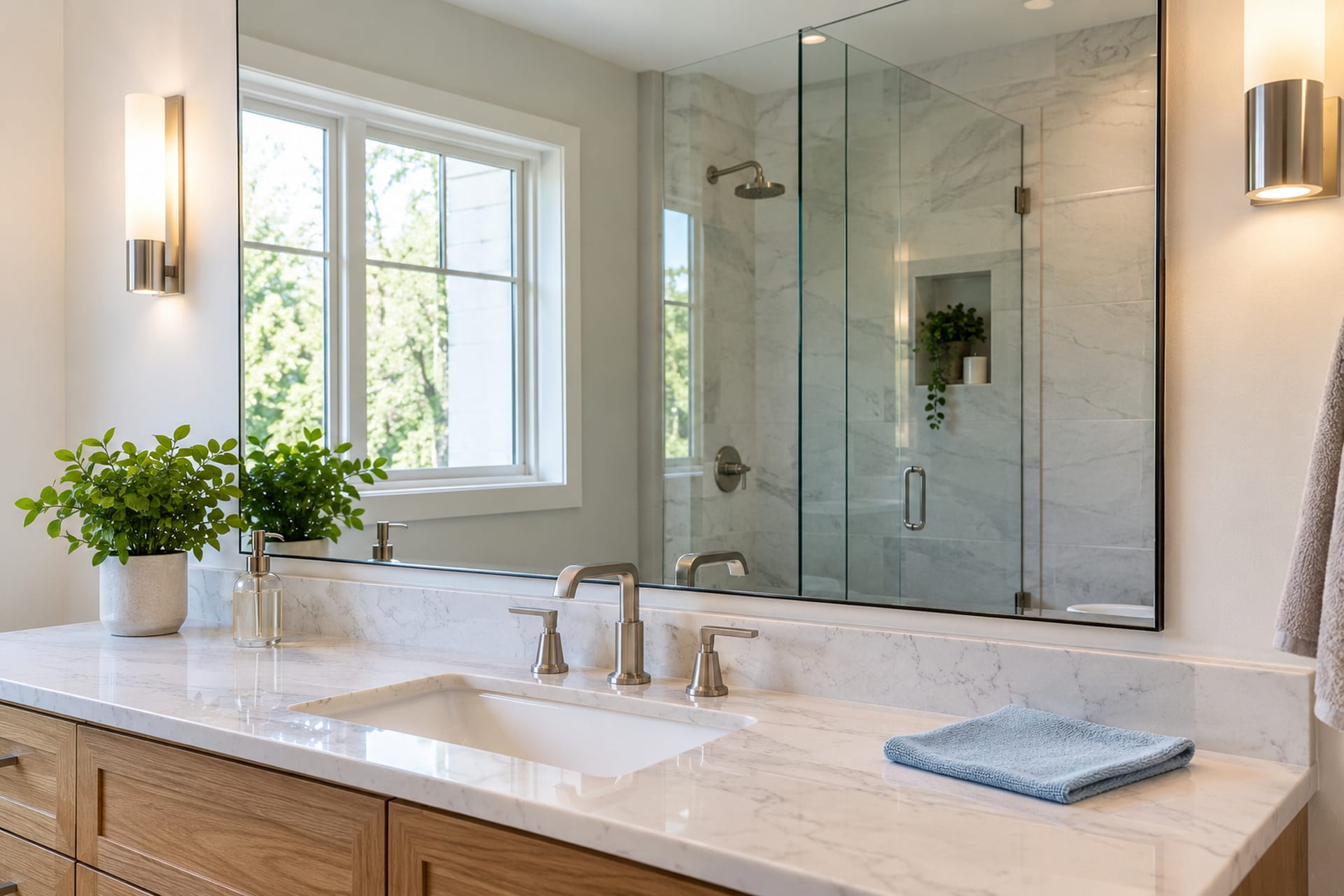
Learning how to clean a mirror without streaks is mostly about using less: less cleaner, fewer passes, and a cloth that leaves nothing behind. In beauty work you wipe down mirrors constantly, and in my experience the ones that look worst after cleaning are the ones that got the most spray.
The method below works on any glass mirror, from a bathroom mirror to a mirror wall. I also cover the mirrors that need extra care: the LED bathroom mirrors with electrics behind the glass, fog-free shaving mirrors, and framed bathroom wall mirrors whose edges suffer when liquid gets behind them.
Why Mirrors Streak
A streak is something left on the glass that bends the light: cleaner that dried before you wiped it off, soap or hairspray film you spread around, lint from the cloth, or minerals from hard tap water. The usual causes:
- Too much cleaner. What the cloth cannot absorb dries into a film.
- A dirty or fabric-softened cloth. Softener leaves a waxy coat that smears; old grime goes straight back on the glass.
- Paper towels. They shed lint and push liquid around rather than lifting it.
- Heat and sun. Cleaner flashes dry on a warm mirror or in direct sunlight before you can buff it.
- Skipping the dry buff. The last pass with a dry cloth is what removes the final thin film.
What You Need
Two clean cloths and warm water do most of the work. The ammonia-free cleaner is only for spots that water will not shift.
-
1Microfiber cloths
MR.SIGA Microfiber Glass Cloths, 6 Pack
Fine, lint-free, non-abrasive microfiber at 13.7 by 15.7 inches, machine washable. Six means you always have a dry one for buffing.
-
2Glass cleaner
Sprayway Foaming Glass Cleaner, 6 Pack
A foaming aerosol for glass that the listing describes as ammonia-free and says lifts fingerprints, dust, dirt and smoke film. Spray it onto the cloth, not the mirror, and only for spots warm water will not shift.
-
3Water-only cloths
A waffle-weave cloth used damp with plain water, then a smooth polishing cloth used dry. No cleaner at all, which is the gentlest option for LED and coated mirrors.
-
4Squeegee
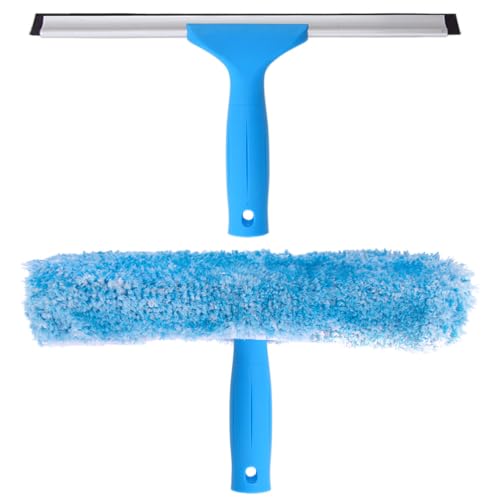
MR.SIGA 14" Squeegee and Scrubber
A 14 inch squeegee with a natural rubber blade plus a microfiber scrubber, for large mirrors, mirror walls and shower glass.


How to Clean a Mirror Step by Step
This takes about five minutes for a bathroom mirror. Do it when the room is cool and out of direct sun.
Cleaning a mirror without streaks
-
Dust the mirror dry
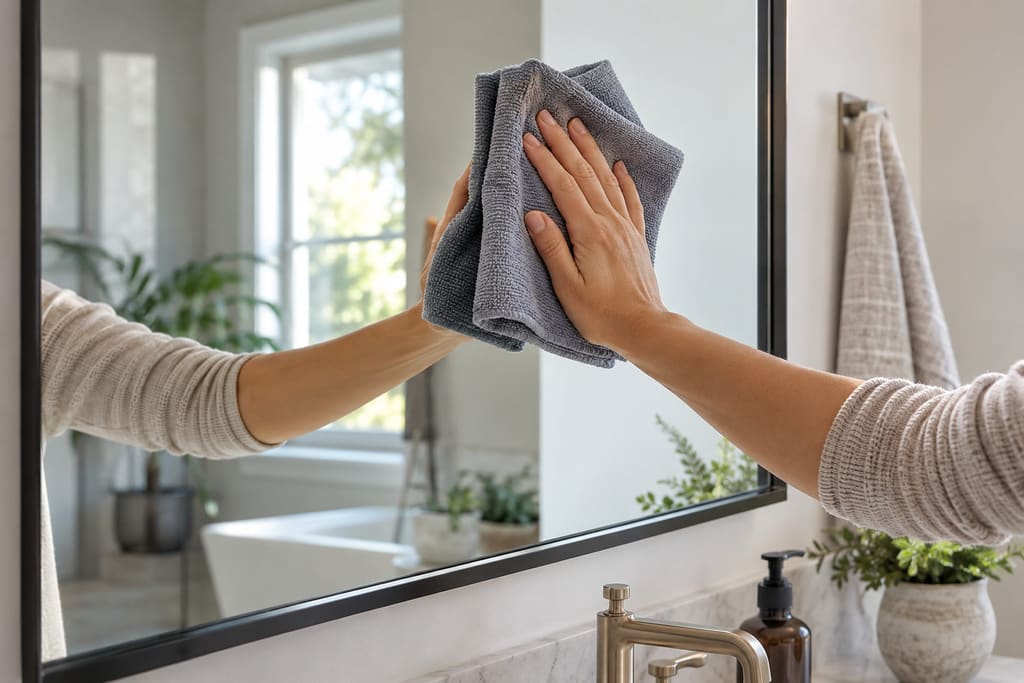
Wipe the whole mirror with a dry microfiber cloth first. Dust and hair mixed with cleaner turn into the gray smears that people blame on the spray. Do the frame and the top edge too.
-
Soften stubborn spots
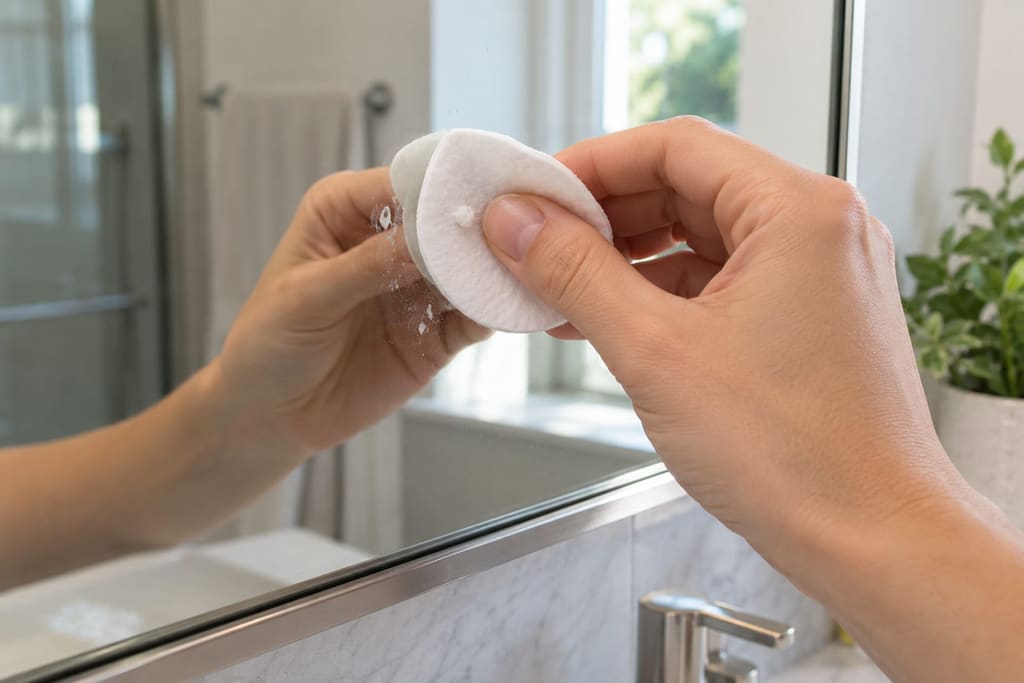
Hold a pad or cloth dampened with warm water on dried toothpaste and makeup for a few seconds, then wipe. Most spots let go once they soften. If one will not, mist a little mild, ammonia-free glass cleaner onto the pad, never onto the mirror, and dab again. Do not scrape with anything abrasive.
-
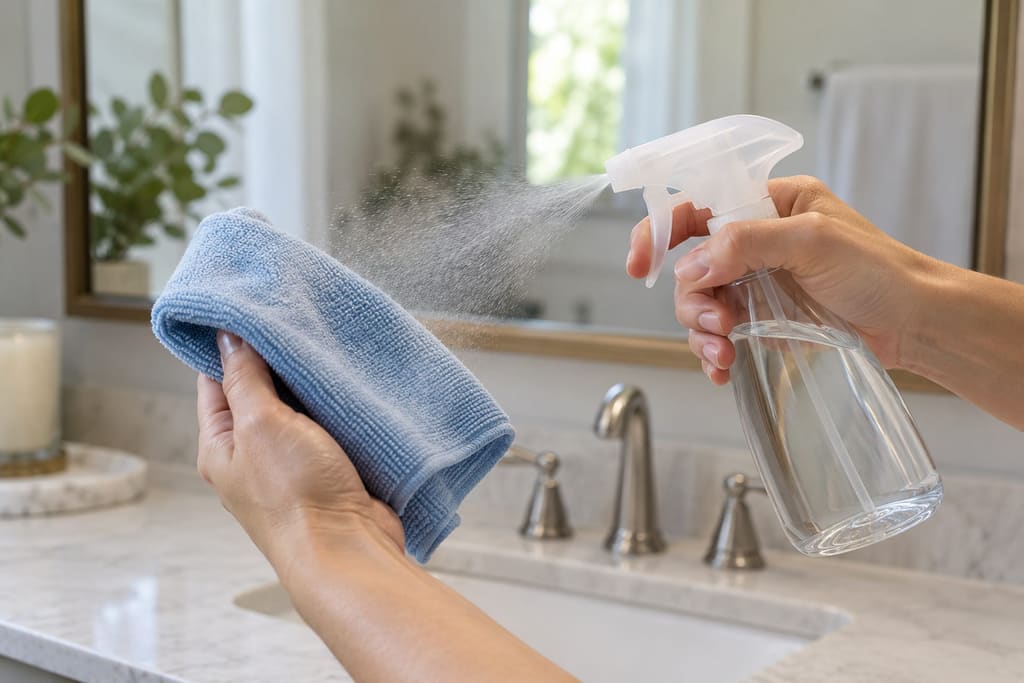
Spray the cloth, not the mirror
Dampen a clean microfiber cloth with warm water and wring it out well, or mist a little ammonia-free cleaner onto it if the mirror is filmy. Spraying the glass sends drips down to the bottom edge, where they can seep behind the mirror. One or two sprays per section is enough.
-
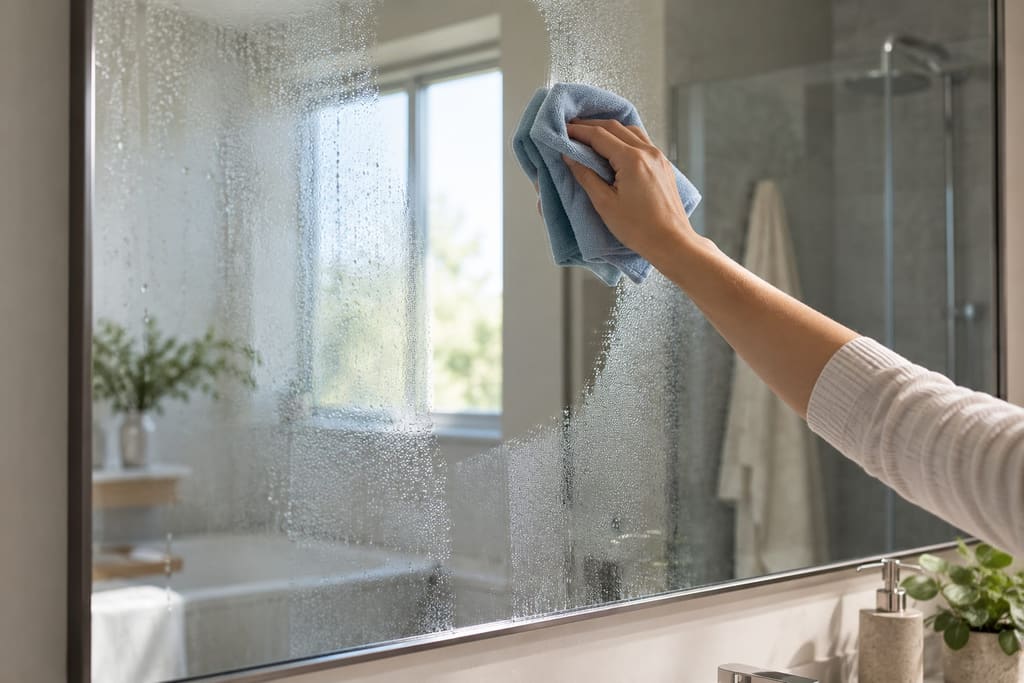
Wipe top to bottom, then buff dry
Wipe in overlapping strokes from the top down, in an S pattern, so you are always moving dirt toward a clean area. Then buff the whole mirror with a second, dry microfiber cloth, or pull a squeegee down it, until no haze is left. Finish by drying the edges and the bottom, where moisture sits. Check from an angle, with light coming from the side.
The Best Mirror Cleaner: What Actually Works
There is no magic formula, and the mirror makers agree. The National Glass Association's mirror cleaning bulletin, written with manufacturers of quality mirrors, puts it plainly: the very best and safest cleaner for a mirror is clean, warm water and a soft, lint-free cloth. These are the options I rate, in the order I would try them.
Warm water and a good microfiber cloth
This is the method I use on almost every mirror. Wring the cloth until it is barely damp, wipe, then dry the glass straight away with a dry lint-free cloth. A two-cloth system like the E-Cloth kit is built around exactly this, and it is the safest choice for LED and coated mirrors too. If your tap water is hard and leaves spots, use distilled water.
A mild, ammonia-free glass cleaner, on the cloth
For bathroom film that water will not shift, use a small amount of a mild glass cleaner that contains neither ammonia nor vinegar, sprayed onto the cloth rather than the mirror. Sprayway's foam is sold as ammonia-free; check the label of any cleaner you buy for both ingredients.
Why I skip vinegar on mirrors
Equal parts white vinegar and water is the most repeated mirror tip online, but glass makers advise against it. The NGA bulletin says not to use mirror cleaners that contain ammonia or vinegar, and not to use acid or alkali cleaners at all, because they can attack the front surface, the edges and the silver backing. Vinegar is an acid and ammonia is an alkali. On a window that is a small risk; on a mirror, it is how black edges start.
What to avoid
- Vinegar, ammonia, bleach and any other acid or alkali cleaner.
- Solvents such as rubbing alcohol and acetone, which can damage the edges and backing.
- Abrasive powders, scouring cream and scrub pads, which scratch glass and coatings.
- Spraying anything directly onto the mirror.
- Newspaper, an old trick that can leave ink on frames and grout.
- Paper towels, which leave lint.
How to Clean LED, Lighted and Anti-Fog Mirrors
A lighted mirror has drivers, wiring and sometimes a heating pad behind the glass. Water in the wrong place can damage it or create a shock risk, so the rules are stricter.
Switch it off first
Turn the mirror off and unplug it. For a hardwired mirror, switch it off at the wall switch, and if you will be cleaning around the edges, at the breaker. If it has a defogger, let the glass cool before you clean.
Never spray onto the mirror
Spray only onto the cloth, and use as little liquid as possible. Keep moisture away from the edges, the frosted light band, touch buttons and sensors, and the seams where the glass meets the frame. A water-only microfiber is the gentlest choice.
Read the maker's manual
Some LED and anti-fog mirrors have coatings that their makers say should not meet certain cleaners. If the manual names a cleaner to avoid, avoid it. On fog-free shower mirrors, follow the maker's care instructions to keep the anti-fog surface working.
Protect the Edges: Why Mirrors Go Black
The reflective layer of a mirror is a thin coat of silver on the back of the glass, protected by paint. When cleaner or water runs down and soaks into the bottom edge again and again, it can attack that layer from the edge inward. The result is the dark, spreading patches people call desilvering, and it cannot be cleaned off.
Four habits prevent it: spray the cloth rather than the mirror, skip vinegar, ammonia and solvent cleaners, dry the edges and the bottom after cleaning, and keep the bathroom ventilated so the mirror is not wet for hours after every shower.
Large Mirrors and Mirror Walls
For a mirror wall in a home gym or dance room, cloths alone take forever and streak where you overlap. Borrow the window cleaner's squeegee, but not the soaking: dampen the scrubber in warm water and squeeze it out so it is not dripping, wipe one panel at a time, then pull the squeegee down in long overlapping strokes, wiping the blade after each one. Glass makers advise wiping along the joints between panels, never across them, so liquid does not collect in the seams. Finish the joints, edges and bottom with a dry microfiber. My guide to home gym mirrors covers the panels themselves.
Framed and Decorative Mirrors
Clean the glass with a lightly dampened cloth and keep liquid off the frame. Gold leaf, painted and wooden frames only need a soft dry cloth or a soft brush, and beaded or carved frames collect dust in their crevices, so give them a brush now and then.
Sources
- National Glass Association: Proper Procedures for Cleaning Flat Glass Mirrors (FB06-05) Warm water and a lint-free cloth as the safest cleaner, cleaner on the cloth rather than the mirror, no ammonia, vinegar, acid, alkali, solvents or abrasives, wipe along the joints of mirror walls, and dry edges to prevent black edge.
Keep reading: Best LED bathroom mirrors · Best shaving and shower mirrors · Bathroom wall mirrors · How to hang a heavy mirror · Acrylic vs glass mirrors
The MirroRank letter
New mirror picks, sizing and lighting tips from Joan, about once a month.