
As an Amazon Associate I earn from qualifying purchases. All claims are strictly my personal opinion.
A quick glance in the mirror before heading out the door is one of those small rituals that can genuinely change how confident you feel for the rest of the day. But mirrors do so much more than reflect your outfit — the right mirror, placed thoughtfully, can transform the entire feel of a room. I’ve spent a lot of time exploring this topic over on the Blog, and I keep coming back to one truth: choosing the right mirror size and shape is one of the easiest, most impactful decorating decisions you can make. Whether you’re styling a bathroom, a bedroom, or a living room, this guide will walk you through everything you need to know.
⚡ Key Takeaways
- A well-placed mirror can make a room feel significantly larger by creating the illusion of depth — particularly effective in smaller bathrooms and narrow hallways.
- The general rule for bathroom mirrors is to choose a mirror that is a few inches narrower than your vanity on each side, so proportions feel balanced rather than cramped.
- Mirror shape carries real visual weight: round mirrors soften a space, rectangular mirrors add structure, and irregular shapes bring a contemporary, artistic edge.
- According to Homes and Gardens, placement matters as much as size — especially in bedrooms, where mirror positioning can affect sleep and overall well-being.
- Mirror walls are a rising decor trend in 2026, with Good Housekeeping reporting they can brighten dark corners and make any room feel more expansive when placed intentionally.
Why Mirrors Are One of the Most Versatile Decor Tools You Own
It’s easy to think of mirrors as purely functional — something you glance at before leaving the house. But interior designers have long known that a well-chosen mirror is one of the most powerful decorating tools available, often delivering the effect of an expensive renovation without the price tag.
According to SEIDO Art Services, one of the most celebrated advantages of mirrors in interior design is their ability to create the illusion of a larger, more open space. This makes them especially valuable in compact rooms like bathrooms, studios, or narrow hallways where every visual inch counts.
They Amplify Natural Light
Mirrors don’t just reflect your face — they reflect light. Pamela Lynn Interiors explains that positioning a mirror opposite or adjacent to a window can nearly double the perceived brightness of a room, bouncing daylight into shadowy corners. This is a budget-friendly alternative to installing additional lighting fixtures.
The effect is especially noticeable in bathrooms, where a single overhead light can leave parts of the room feeling dim. A large mirror above the vanity reflects both natural and artificial light, creating a brighter, more flattering environment for your daily beauty routine.
ℹ️ Did You Know?
According to Edward Martin, in Feng Shui philosophy mirrors are considered powerful tools used to redirect qi — the life force that flows through your home — and are believed to influence everything from harmony to prosperity in a space.
They Add Sophistication Without Clutter
Mirrors are inherently minimalist in their impact. A single statement mirror can anchor a wall, giving it purpose and visual weight without filling the room with objects. This makes mirrors a go-to choice for anyone who loves a clean, uncluttered aesthetic but still wants a space that feels designed and intentional.
They’re also eco-conscious: unlike paint, wallpaper, or furniture, a quality mirror can last decades with minimal maintenance, making it one of the more sustainable decorating investments you can make. As Mercury Glass & Mirrors notes in their 2026 trend report, eco-friendly mirror design is more fashionable than ever.
How to Choose the Right Mirror Size for Any Room
Sizing is where most people get tripped up, and I completely understand why. Go too small and the mirror looks like an afterthought; go too large and it can overwhelm the space. The good news is there are straightforward guidelines that take the guesswork out of the decision. Here’s how I think about it for different rooms and scenarios.
Start with the Room’s Scale
The single most important factor is the overall size and proportion of the room you’re decorating. A petite round mirror that looks charming in a powder room will feel lost and ineffective in a spacious master bathroom. Conversely, an oversized floor-to-ceiling mirror can make a small hallway feel like a fun-house corridor if it’s not chosen carefully.
As a general principle, mid-sized mirrors tend to be the most versatile — they adapt well to different room proportions and rarely feel out of place. If you’re unsure, leaning toward a slightly larger mirror is almost always the safer choice. Mirrors visually recede; they don’t impose the way dark furniture or bold wallpaper does.
💡 Pro Tip
Before purchasing, cut a piece of kraft paper or newspaper to the exact dimensions of the mirror you’re considering and tape it to the wall. Live with it for a day or two. This simple trick saves a surprising number of people from buying the wrong size.
The Bathroom Mirror Sweet Spot
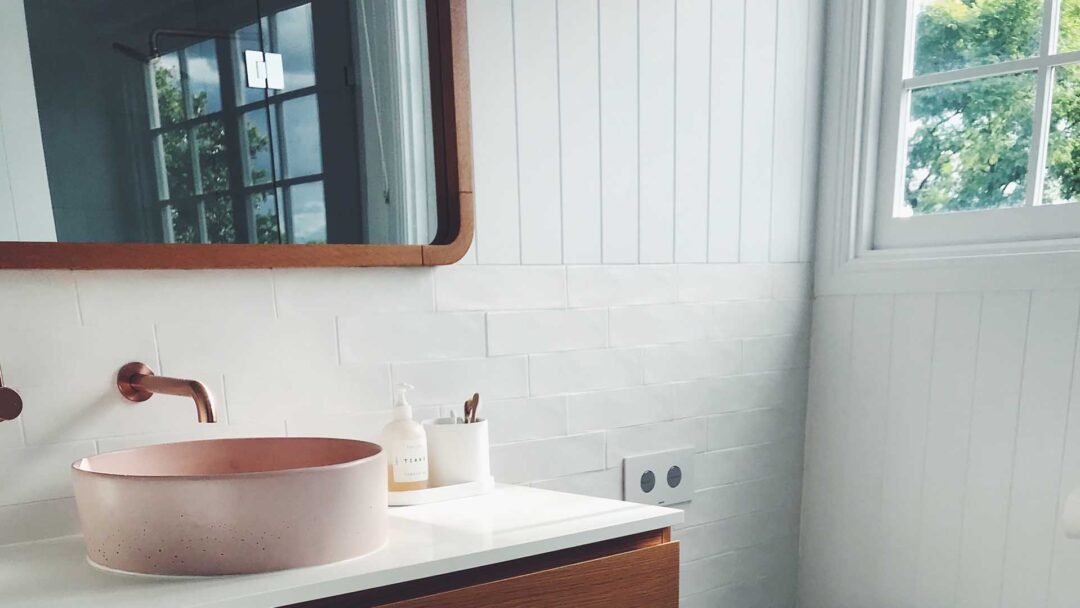
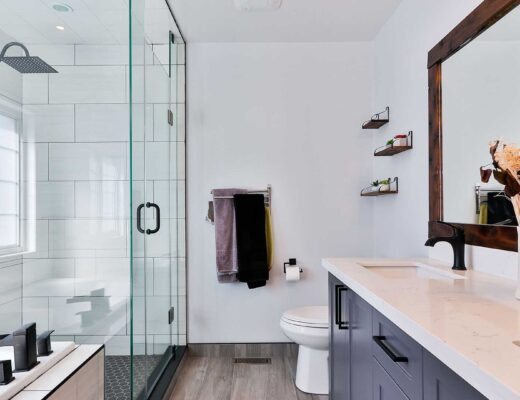
For bathrooms specifically, the most common and visually pleasing guideline is to choose a mirror that is slightly narrower than your vanity — typically leaving a few inches of clearance on each side. This creates a grounded, balanced composition rather than a mirror that seems to float disconnected from the sink below it.
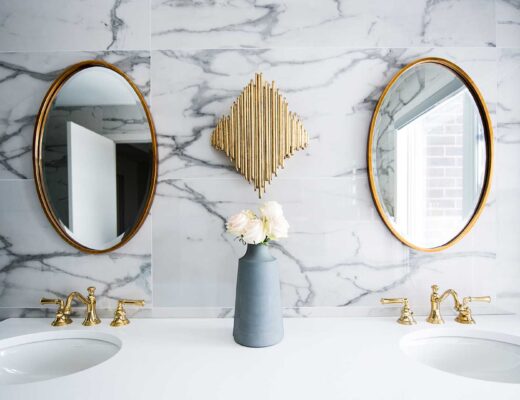
Height matters too. If you have tall ceilings or a particularly generous wall above your vanity, a taller mirror (or even a pair of mirrors) can fill that vertical space beautifully while making the whole bathroom feel more luxurious. For a deeper dive into mirror options by room, my guide to Best Bathroom Wall Mirrors 2026 covers the top-rated picks I’ve personally evaluated.
Factor in Your Decor Style
Size isn’t the only variable — the frame style, finish, and overall profile of the mirror need to align with your existing decor. A sleek, frameless mirror suits contemporary and minimalist interiors. A chunky ornate frame leans traditional or maximalist. Getting the right size but the wrong style can be just as jarring as getting the proportions wrong entirely.
- For modern or Scandinavian interiors, opt for frameless mirrors or thin metal frames in matte black or brushed brass.
- For traditional or transitional spaces, beveled edges and wood or resin frames in warm tones feel right at home.
- For eclectic or maximalist rooms, don’t be afraid of an ornate, statement frame — it becomes art in its own right.
- For industrial or loft-style spaces, antique or aged mirror glass with a raw metal frame adds the right amount of character.
Why Mirror Shape Matters More Than You Think
Shape is the design detail that most people overlook when shopping for a mirror, but it has an enormous influence on the mood and feel of a room. Each shape sends a different visual signal, and choosing intentionally — rather than defaulting to whatever’s easiest to find — can elevate your space considerably. Here’s a breakdown of what each shape communicates and where each works best.
Round Mirrors: Soft, Modern, and Approachable
Round mirrors have had a sustained moment in interior design, and I don’t see that changing anytime soon. The circular shape introduces softness into rooms that might otherwise feel boxy or rigid, which is why they work so well in bathrooms, entryways, and above console tables in living rooms.
They’re also a smart choice if you want to add visual interest without committing to a bold color or pattern. A large round mirror in a simple frame can serve as the focal point of an entire wall, and it pairs beautifully with organic, natural textures like rattan, linen, and wood.
Rectangular and Square Mirrors: Classic Structure
The rectangle is the mirror equivalent of a little black dress — it works almost everywhere and never goes out of style. Vertical rectangles elongate a wall and draw the eye upward, making ceilings feel higher. Horizontal rectangles (landscape orientation) widen a space, which can be ideal for a long, narrow bathroom vanity.
Square mirrors strike a balance between the two and are particularly effective in symmetrical layouts — think two square mirrors flanking a bathroom vanity, or a grid arrangement on a living room wall. They communicate order, precision, and calm.
Irregular and Geometric Shapes: Contemporary and Artistic
Irregular shapes — arched mirrors, sunburst designs, triangles, organic asymmetrical forms — are having a major moment in 2026. These mirrors function as wall art as much as reflective surfaces, adding personality and movement to a room. They’re an excellent choice if your space is fairly neutral and you want one statement piece to anchor it.
An arched mirror above a vanity, for instance, softens the hard angles of tile and cabinetry while adding a sense of architectural detail. A sunburst mirror in a living room brings a glamorous, retro-inspired energy. If you want to mix styles — contemporary meets traditional, for example — an irregular mirror is often the perfect bridge.
⚠️ Important
Be thoughtful about where you place a mirror in the bedroom. According to Homes and Gardens, Feng Shui experts caution that a mirror facing the bed can disrupt sleep quality and overall well-being for some people. If you love mirrors in the bedroom, consider positioning one on the inside of a wardrobe door or on a wall that isn’t directly facing the bed.
Placement Tips That Make All the Difference
Even the most beautifully sized and shaped mirror can underperform if it’s hung in the wrong spot. Placement is where the practical and the aesthetic meet, and getting it right is what separates a mirror that looks intentional from one that just happens to be on a wall.
Height: Where Should the Mirror Hang?
The standard recommendation is to hang a mirror so that its center sits at approximately eye level — for most adults, that’s around 57 to 60 inches from the floor. In a bathroom, the mirror should be positioned so that the average user can see their full face without craning their neck up or stooping down.
If you’re installing a mirror above a vanity, the bottom edge should clear the faucet and backsplash by at least a few inches — both for practical clearance and for visual breathing room. Leaving too little space between the countertop and the mirror bottom can make the arrangement feel cramped.
Facing a Window vs. Facing a Wall
One of the most impactful placement decisions you can make is choosing what your mirror reflects. A mirror placed opposite a window will multiply the natural light in your room, making it feel sunnier and more open — particularly effective in rooms that don’t get much direct sunlight. This is a technique I’ve seen recommended consistently by professional interior designers, including those at Demers Glass.
A mirror facing a wall, on the other hand, reflects more of the room’s interior — which can be beautiful if you have gorgeous furnishings or artwork worth amplifying, but can feel flat if the room is minimally decorated.
💡 Pro Tip
Never hang a mirror so it reflects a cluttered storage area, a messy corner, or a blank wall. Whatever your mirror faces is what it will feature — make sure that view is worth doubling.
Caring for Your Mirror So It Always Looks Its Best
A gorgeous mirror that’s smudged, streaked, or cloudy at the edges does very little for your space — or your confidence when you’re checking your look. Proper mirror care is simpler than most people think, but a few common mistakes can damage the reflective surface over time.
- Clean your mirror with a lint-free microfiber cloth and a gentle glass cleaner. Avoid spraying liquid directly onto the mirror surface — spray the cloth instead, then wipe. This prevents moisture from seeping behind the glass and causing edge deterioration (known as “foxing”).
- Avoid abrasive cleaners, rough sponges, or anything containing bleach. These can scratch the glass or strip the reflective backing over time.
- In bathrooms, ensure adequate ventilation to minimize humidity buildup around the mirror’s edges. Persistent steam can accelerate edge darkening on lower-quality mirrors.
- When installing a heavier mirror, always anchor it into wall studs or use appropriate wall anchors rated for the mirror’s weight. A fallen mirror is both a safety hazard and a heartbreak.
✨ The Bottom Line
Choosing the right mirror comes down to three things working together: proportional sizing for the room, a shape that suits your decor style, and placement that makes the most of light and reflection. There’s no single “correct” answer — but there are principles that consistently produce beautiful, functional results. Start by measuring your space, identifying what you want the mirror to achieve (more light, more visual space, a design focal point), and work from there. The right mirror isn’t just something you look at — it’s something that transforms the room around it.
❓ Frequently Asked Questions
How wide should a bathroom mirror be relative to the vanity? +
Can a mirror really make a small room look bigger? +
Is it bad to have a mirror facing the bed in the bedroom? +
What shape of mirror works best in a small bathroom? +
How do I clean a bathroom mirror without damaging it? +
Conclusion
The right mirror is one of those rare decor decisions that pays dividends on multiple fronts simultaneously — it adds light, expands perceived space, brings personality, and serves a practical everyday function all at once. The key is approaching the choice intentionally: let the scale of the room guide the size, let your decor style guide the shape and frame, and let the principles of light and reflection guide the placement.
My suggestion? Start with your bathroom if that’s where you’re feeling the most uncertainty. Measure your vanity, consider the height of your ceiling, and think about whether you want the mirror to be a quiet background element or a genuine statement piece. From there, the rest falls into place more naturally than you’d expect. A beautiful mirror is waiting for the right wall — go find it.


No Comments