Mirror guide
How to Cut a Mirror
 By Joan Bardot · Updated 4 sources cited
As an Amazon Associate I earn from qualifying purchases. How I choose products.
On this page
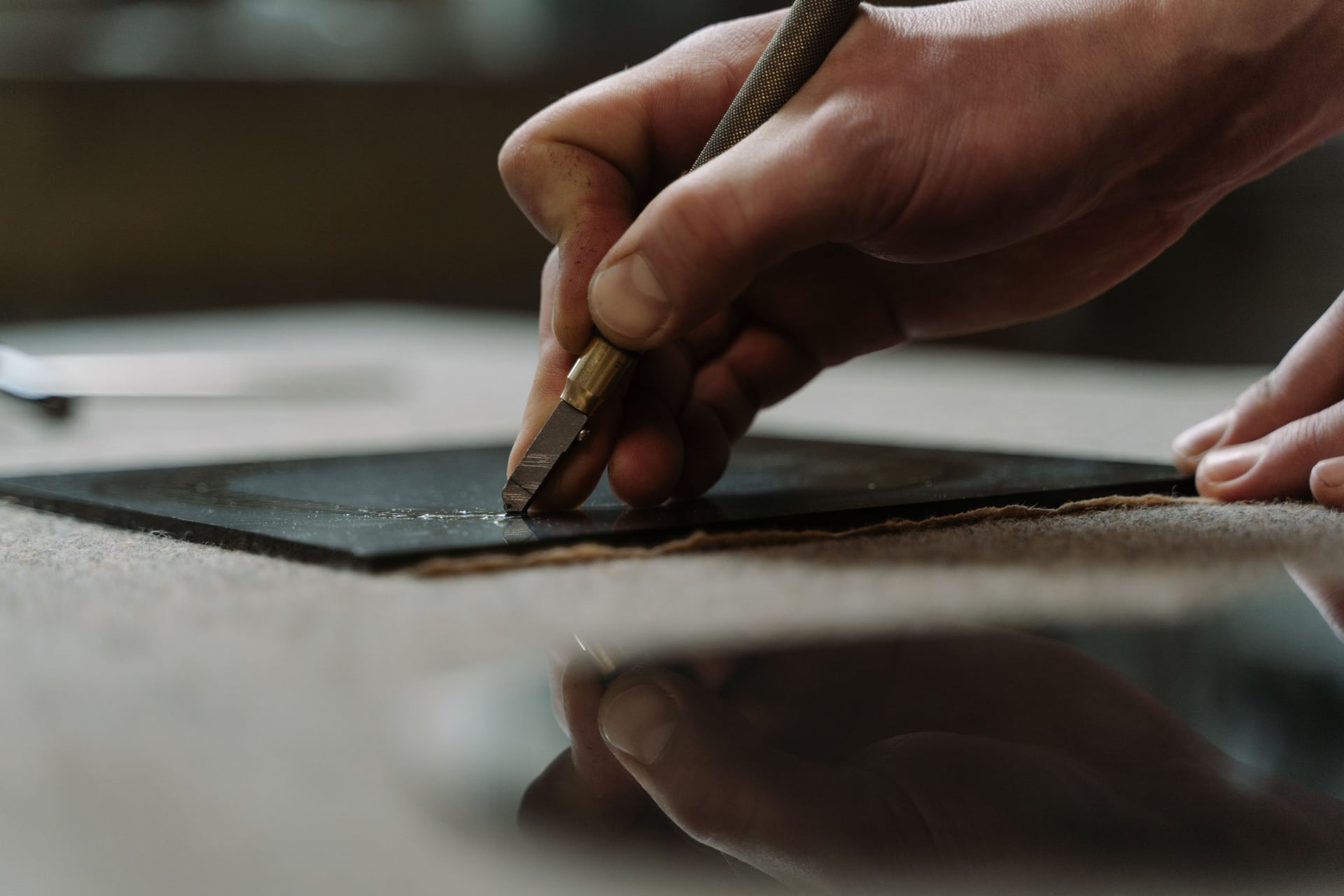
Learning how to cut a mirror is mostly learning how to cut glass, because a mirror is a sheet of ordinary glass with a reflective layer and paint on the back. The technique is old and simple: you score a fine line across the surface with a hard wheel, then break the glass along that line. Done right, it takes a few seconds and leaves a clean edge. Done wrong, you get chips, a crack that wanders off the line, or a cut hand.
This guide takes you through what you need, the score-and-snap method step by step, cutting curves and circles, finishing the edges, and the jobs I'd always hand to a glass shop. If you are cutting a mirror to fit a space, work out the size first with my bathroom mirror size chart, and remember that a ready-made mirror is often less work: my picks for the best bathroom wall mirrors come in a wide range of sizes.
How Glass Cutting Works
The best short explanation I know comes from Bullseye Glass, a glass maker that publishes free studio guides. Its Glass Cutting Basics sheet puts it plainly: "A glass cutter does not saw glass." The wheel creates a shallow fissure as it rolls across the surface, and when you press down on both sides of that line, the fracture runs along it and the glass snaps.
What a Good Score Looks and Sounds Like
Bullseye explains that the pressure you use decides how clean the break is. Too much pressure leaves a gritty white line with flakes and chips; too little leaves a broken, patchy line that snaps unpredictably. A good score is "uniformly shallow and continuous, without flakes", and you can hear it: a crisp, even zipping sound, not a scratchy grind.
Why Mirror Glass Is Cut From the Front
A household mirror is a second-surface mirror: the reflective layer sits on the back of the glass and is covered with protective paint. Always score the glass side, the side you look into. The wheel needs bare glass to bite into, and scoring through the paint and silver on the back damages the coating that protects the mirror's edges.
Can You Cut Any Mirror?
Most flat wall and vanity mirrors are plain annealed glass and can be scored. A few cannot. Tempered (safety) glass can't be cut at all: Wikipedia's article on tempered glass explains that it must be cut to size before tempering, and that cutting or grinding it afterwards makes it fracture into small granular pieces. If the mirror came with paperwork or a corner marking that says tempered or safety glass, leave it uncut. Acrylic mirrors are plastic, not glass, and are cut with a scoring knife or a fine-tooth saw instead; my acrylic vs glass mirror guide explains the differences. Mirrors with built-in LED lights, demisters or wiring should never be cut.
What You Need
A basic mirror-cutting kit. One good cutter matters more than anything else here.
-
1Glass cutter
Toyo TC17B Self-Oiling Glass Cutter
A brass-handled, straight self-oiling cutter: you fill the handle with cutting oil and it feeds the wheel as you score, which keeps the line smooth and even.
-
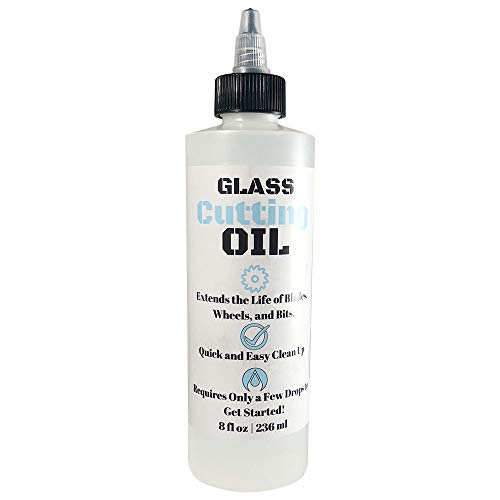
2Cutting oil
Premium Glass Cutting Oil, 8 oz
Oil made for glass cutters, to fill a self-oiling handle or to dip a plain cutter's wheel before each score.
-
3Running pliers
Curved jaws with an adjustable screw, for running a score evenly from the edge without putting your fingers near the break.
-
4Gloves
Klein Tools A4 Cut-Resistant Gloves, 2 Pairs
A4-rated cut-resistant work gloves for handling sheet glass and fresh edges, sold as two pairs.
-
5Eye protection
ANSI Z87 certified wraparound safety glasses with anti-fog lenses, because small chips fly when glass snaps.




Choosing a Glass Cutter for Mirrors
Bullseye's companion sheet, 12 Ways to Improve Your Cutting, written with the glass cutter Rudi Gritsch, gives the clearest buying advice I've found: buy the best cutter you can afford, with a carbide wheel and a comfortable handle, and always use a cutting lubricant.
Wheel Angle by Glass Thickness
| Glass thickness | Recommended wheel angle | Typical mirror use |
|---|---|---|
| Thin sheets, about 2mm | 120° | Small craft and compact mirrors |
| Most glass up to 10mm (about 3/8 in) | 135° | Wall, vanity, door and dance-studio mirrors |
| Thicker than 10mm | 160° | Heavy table tops and shelves; better left to a shop |
The angles are Bullseye's recommendations. For almost every home mirror, a general-purpose 135° wheel is the right one.
Oil, Pencil-Style or Pistol Grip?
Self-oiling cutters hold oil in the handle and feed it to the wheel, which is the easiest way to keep the lubricant going. Bullseye says you can also dip the wheel or brush oil on. Pencil-style handles suit straight cuts on a table; pistol grips put less strain on your hand over long cuts. Pick the one you can hold upright and steady: Bullseye recommends keeping the wheel perpendicular to the glass and moving your whole body, not just your wrist, for the most even score.
How to Cut a Mirror Step by Step
Work on a flat, solid table covered with a blanket, felt or a piece of carpet, so the glass is fully supported and grit can't scratch the face. Let the mirror reach room temperature first: Bullseye notes that cold glass is harder to cut.
Cutting a mirror, step by step
-
Clean and mark the glass side
Clean the face of the mirror so there is no dust or grease under the wheel. Measure twice and mark both ends of the cut on the glass side with a fine marker. Line up a straightedge so the wheel will run exactly on your marks, allowing for the small offset between the edge of the cutter head and the wheel.
-
Oil the wheel
Fill your self-oiling cutter or dip the wheel in cutting oil. A dry wheel skips and leaves a broken score.
-
Score once, edge to edge
Start just in from the far edge and pull or push the cutter in one continuous stroke off the near edge, with firm, even pressure and a steady speed. Listen for an even zip. Do not stop halfway and do not go back over the line: Bullseye's rule is never to score twice over the same path, because it dulls the wheel and spoils the break.
-
Snap it straight away
Break the glass immediately: a score left to sit starts to crack along its length and stops running cleanly. For a straight cut, slide the score to the edge of the table and press down on the overhanging part, or hold the glass with both hands, thumbs either side of the line, and roll your wrists outward.
-
Or run it with pliers
Running pliers give the most even break. Line up the mark on the top jaw with the score, place them at the edge of the glass where the score ended, and squeeze gently until the crack runs across. On long cuts, run it from one end and then the other.
-
Smooth the new edge
The fresh edge is razor sharp. Wearing gloves, take the arris off with wet-and-dry abrasive paper or a diamond sanding pad held at an angle, working along the edge with water. Finish the corners. An edge that will be hidden by a frame still needs the sharpness taken off for safe handling.
-
Seal the backing at the edge
Cutting exposes the reflective layer at the new edge. Clean off any oil and seal it with a mirror edge sealant before the mirror goes near a bathroom or a damp wall, so moisture can't get under the backing.
Cutting Curves, Circles and Notches
Curves and Circles
Curves are scored the same way, by following a template, but they break differently. Bullseye points out that a break tends to run as directly as possible to the nearest edge, so for complex curves it advises starting to run the score from inside the sheet, away from the edge. For a circle, score the circle, then add straight relief scores from the circle out to the edges, and break away the waste piece by piece. A circle cutter, a pivoting arm with a suction base, makes round mirrors far easier.
Thin Strips
Narrow strips are hard because the break drifts towards the side with less glass. Bullseye's trick is to keep an equal mass of glass on each side of every score: start with a piece four times as wide as the strips you need, cut it in half, then cut each half in half.
Notches and Holes
Inside corners and holes for sockets or taps can't be scored and snapped. They need a diamond core bit or a wet saw, and a mistake usually cracks the whole sheet. This is where I hand a mirror to a glass shop.
Troubleshooting a Bad Cut
| What happened | Likely cause | What to do next time |
|---|---|---|
| White, gritty score with flakes | Too much pressure | Ease off; aim for an even zip, not a crunch |
| The break wandered off the line | Patchy score, or more glass on one side | One continuous stroke; balance the glass on both sides of the score |
| The score skipped in places | Dry or worn wheel, uneven speed | Oil the wheel; replace a worn cutter |
| Jagged, flared edge | Tapping to start the break | Use running pliers; if you must tap, tap directly under the score |
| Small cracks along the score before breaking | Waited too long to snap | Break out the glass immediately after scoring |
| A poor score you can't break | Score not deep or continuous | Bullseye: turn the glass over and score carefully along the same line, then break as usual |
When to Let a Glass Shop Cut It
Cutting a small mirror for a craft project or trimming a panel to fit an alcove is a fair DIY job. Some jobs aren't worth the risk.
Big or Heavy Mirrors
Large sheets are awkward to support and dangerous to snap by hand, and a break that runs wrong across a big piece wastes the whole mirror. If you are fitting a wall of mirrors for practice, a professional cut is the better plan; my guide to the best dance studio mirrors covers panels that come ready to hang.
Mounted, Tempered or Lit Mirrors
Never cut a mirror that is still on the wall or glued to a door: take it down first. My guide to removing a mirror glued to the wall explains how. Tempered glass can't be cut at all once it has been toughened, and LED mirrors have wiring and pads behind the glass.
Getting a Mirror Cut to Size
Local glass shops cut mirror to size, and some home improvement stores offer glass cutting too. Services vary from store to store, so call ahead and ask whether they cut mirror, the largest size they handle, and whether they polish the edges. Polished edges matter if the mirror will hang without a frame. If you are hanging the finished piece yourself, my guide to hanging a heavy mirror picks up from here.
Sources
- Bullseye Glass Co.: Glass Cutting Basics How scoring works, what a good score looks and sounds like, scoring off the edge, not retracing a score, breaking with fingers, a straightedge or running pliers.
- Bullseye Glass Co.: 12 Ways to Improve Your Cutting (tips by Rudi Gritsch) Carbide wheels and cutting oil, wheel angles of 120, 135 and 160 degrees by thickness, cold glass, balanced scores, never scoring twice, running curves from the interior, tapping, breaking immediately.
- Wikipedia: Tempered glass Tempered glass must be cut before tempering and fractures into small granular chunks if cut or ground afterwards.
- Wikipedia: First surface mirror Second-surface mirrors have the reflective layer behind the glass, which is why household mirrors are scored on the glass side.
Keep reading: How to hang a heavy mirror · Acrylic vs glass mirrors · Best bathroom wall mirrors · Best dance studio mirrors
The MirroRank letter
New mirror picks, sizing and lighting tips from Joan, about once a month.