Mirror guide
How to Use the 3M Claw Drywall Hanger for a Mirror
 By Joan Bardot · Updated 1 sources cited
As an Amazon Associate I earn from qualifying purchases. How I choose products.
On this page
If you are trying to work out how to use a 3M Claw drywall picture hanger for a mirror, the good news is that the product is built to be simple. The harder part is everything around it: knowing what your wall is made of, knowing what your mirror actually weighs, and checking that the back of the mirror has something a hanger can hold.
I wrote this for two kinds of reader: people who already have a pack of Claws in a drawer, and people deciding whether to buy one. Everything I say about the product itself comes from 3M's own product page, and I flag where the page doesn't give a number. Where a mirror is heavy or sits somewhere risky, my guide to hanging a heavy mirror goes further than a single hanger can.
How Claw Drywall Hangers Work
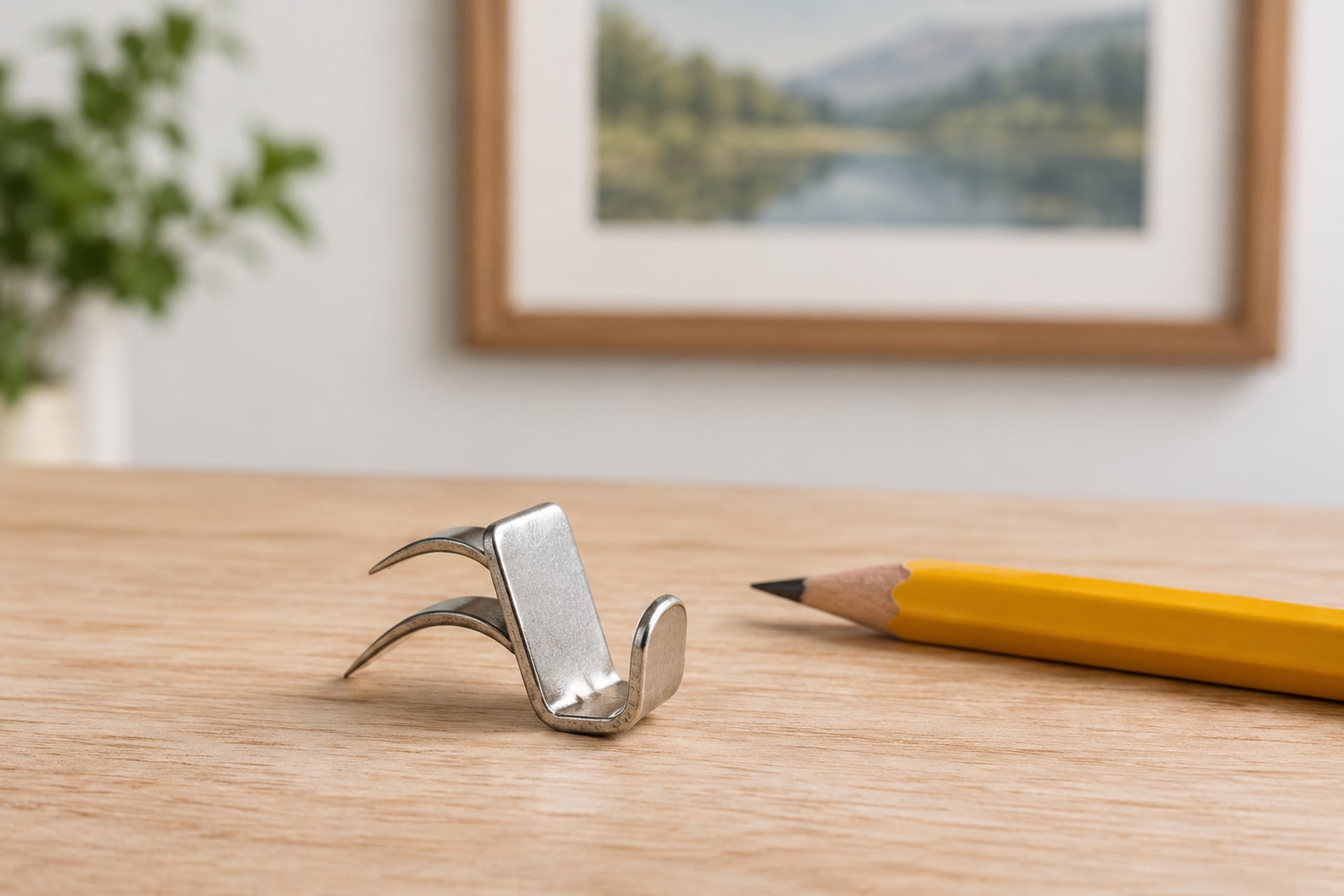
A claw drywall hanger is a small hook with hardened steel prongs. You press it into the wall, and the prongs grip the drywall itself, so you don't need a stud, a screw or a plastic anchor behind it. That is the whole idea, and it is why people like it for a mirror that has to land in a very particular spot rather than wherever a stud happens to be.
What 3M Says It Does
The 3M product page for the Claw 65 lb. drywall picture hanger describes hardened steel claws that lock into drywall anywhere, with no anchors and no studs needed. It calls the method "push, hang, done". The page also lists the hanger as reusable and says it leaves no big holes in the wall. The legal note at the bottom of the page is the one to remember: for use on drywall only.
What It Doesn't Do
A Claw is a hook, not a mount. It carries a picture by whatever is on the back of the frame, whether that is a wire, a sawtooth bracket or a D-ring. It does not clamp a mirror, and it does not make a wall stronger than it is. If the wall behind is not drywall, or the mirror has no hanging hardware, the hanger is the wrong tool before you even start.
Which Size for Your Mirror?
3M sells Claw hangers in more than one strength. 3M's page for the 65 lb. version describes it as proven to hold 65 lbs per hanger and suitable for pictures, mirrors and other heavy objects. For every other size, the rating is printed on the package, and that printed number is the one to trust for the pack you bought.
Weigh the Mirror First
Don't guess. A bathroom scale is enough: weigh yourself, then weigh yourself holding the mirror, and subtract. Glass is heavy for its size, and a framed mirror is often heavier than people expect, especially a large one with a solid wood frame. Write the number down before you open the pack.
Leave a Margin
A hanger's rating is the most it is proven to hold, not a target. I would pick a rating comfortably above the weight of the mirror, and I would not run a hanger at its limit on glass, where a fall means broken pieces and not just a dented frame. If the mirror is close to the top of what a single hanger carries, use two hangers spread along the width, or step up to a stud. Two hangers only share the load if the wire or the two D-rings sit level on them, so check that the mirror hangs flat.
| What to check | Why it matters | Where to find it |
|---|---|---|
| Mirror weight with frame | Sets the minimum rating you can use | Your own scale, not the listing |
| Rating per hanger | The most one hanger is proven to hold | Printed on the Claw package; 3M page for the 65 lb. size |
| Wall material | 3M lists the Claw for drywall only | Knock test and a look at the wall edge or an outlet opening |
| Hardware on the mirror | A hook needs a wire or D-ring to hold | The back of the frame |
| Location | Over a bed or sink raises the cost of a fall | Your plan for the room |
Why it matters
Show specifications
- Mirror weight with frame
- Sets the minimum rating you can use
- Rating per hanger
- The most one hanger is proven to hold
- Wall material
- 3M lists the Claw for drywall only
- Hardware on the mirror
- A hook needs a wire or D-ring to hold
- Location
- Over a bed or sink raises the cost of a fall
Where to find it
Show specifications
- Mirror weight with frame
- Your own scale, not the listing
- Rating per hanger
- Printed on the Claw package; 3M page for the 65 lb. size
- Wall material
- Knock test and a look at the wall edge or an outlet opening
- Hardware on the mirror
- The back of the frame
- Location
- Your plan for the room
How to Use the 3M Claw Drywall Picture Hanger
-
Confirm the wall is drywall
Knock on the wall. Drywall sounds hollow and a little papery, while plaster and masonry sound hard and dense. If in doubt, look at the edge of an outlet opening or a switch plate, where the thickness and material of the wall are visible.
-
Weigh the mirror and read the package
Weigh the framed mirror and compare it with the rating printed on your pack, leaving a margin. If the number is too close, buy a stronger hanger or plan on two.
-
Check the back of the mirror
The mirror needs a picture wire or a pair of D-rings screwed into the frame. Pull the wire taut, hook it over a finger and measure how far down the highest point of the wire sits from the top of the frame. You need that distance to place the hanger.
-
Mark the spot
Hold the mirror against the wall at the height you want, with a helper if it's large, and mark the top edge lightly. Subtract the wire drop measured in the last step and make your hanger mark that far below the top-edge mark. The next section covers the spot marker, which does this job without the arithmetic.
-
Install the hanger
Follow the instructions in your pack for pressing the hanger in. 3M describes the method as pushing the hanger into the wall, with no tools, anchors or studs. Seat it fully so it sits flat against the wall, and don't force a hanger into a spot that feels solid, because that can mean a stud or a different material behind the paint.
-
Hang the mirror and let go slowly
Lift the mirror with both hands, set the wire or ring on the hook, and lower it until the hanger takes the weight. Keep your hands near the frame for a few seconds before you let go, and look for any sag or movement at the wall.
-
Level it
Set a level on the top edge of the frame and adjust. If the mirror won't sit level because the wire is uneven, correct the wire instead of shoving one side of the frame up. Hanging kits that include a small level, like the one in the kit below, make this step quick.
How Do I Use the 3M Claw Spot Marker?
The Claw packs list a spot marker, and 3M says it takes the guesswork out of finding the right spot so you don't have to measure. In plain terms, it is a small marking aid that goes on the hook position so the spot you mark is the spot where the hanger ends up.
Using It With a Wire
Hold the mirror against the wall at its final height. Place the marker where the hook should go, referring to the wire or ring position you measured on the back of the frame. Press it to leave a mark, then remove the marker and install the hanger exactly on that mark.
Check Before You Press
Before pushing a hanger in, hold the mirror up one more time and see if the mark still matches where the wire would catch. A hanger that goes in a few millimeters off is easy to fix now and annoying to fix after the wall has a hole in it. The exact way the marker works is shown in the instructions inside your pack, so follow that over my summary.
When Not to Use It
The Claw is a good tool inside its limits, and most failures come from using it outside them. 3M's listing puts the main limit in one line, for use on drywall only, and I'd treat everything else below as common sense that follows from it.
Plaster, Tile and Masonry
Claws grip the drywall itself. Old plaster, tile, brick, concrete and block do not behave like drywall, so a hanger designed for it has nothing to bite on. For those walls use a fixing designed for the material, such as a masonry or tile-specific method, and treat my door mirror guide as a reminder that not every surface in a house takes a hook.
Frameless Glass Without Hardware
A hook can't hold a mirror that has nothing to hang from. A frameless sheet of glass with no wire, rings or bracket has no point of attachment, and drilling or taping it yourself is a different job with different risks. I cover those routes in how to hang a mirror without hooks.
Heavy Mirrors Over Beds and Sinks
Even if the rating covers the weight, the location may not. A mirror over a bed can land on someone, and a mirror over a sink gets steam, splashes and constant touching. For anything heavy in those places, I'd go to a stud or a rated anchor, and my guide to hanging a heavy mirror goes through the options. If you are shopping for a mirror that will be easy to hang, the best decorative mirrors are a better starting point than a heavy antique frame, and if it is a leaning piece you are after, see the best full-length floor mirrors.
Removing It and Patching the Hole
3M describes the hanger as reusable, so you can take it down when you redecorate. The 3M page gives one removal method: slide a flathead screwdriver between the hanger and the wall, then gently pull away.
Taking It Out
Take the mirror down first and put it somewhere safe. Then work the screwdriver between the hanger and the wall and pull the hanger away slowly, rather than yanking it straight out, which is the easiest way to tear the paper face of the drywall. Pull with small movements and stop if the wall starts to crumble.
Patching the Marks
The marks left behind are small, but they are not invisible. A little lightweight spackle pressed into each hole with a finger or putty knife, left to dry, sanded smooth with fine sandpaper and touched up with the wall paint, leaves a flat surface. If you will hang something again in the same place, skip the patch and reuse the holes only if the hanger still sits firmly, since a loosened hole is a weaker hole.
What You Need
The hangers for the wall, and the hardware and level for the mirror's side of the job.
-
1Claw hangers in three strengths
3M CLAW Drywall Picture Hanger Variety Pack
A mixed pack of Claw hangers with spot markers, so you can match the rating printed on each hanger to the weight of the mirror instead of buying one size blind.
-
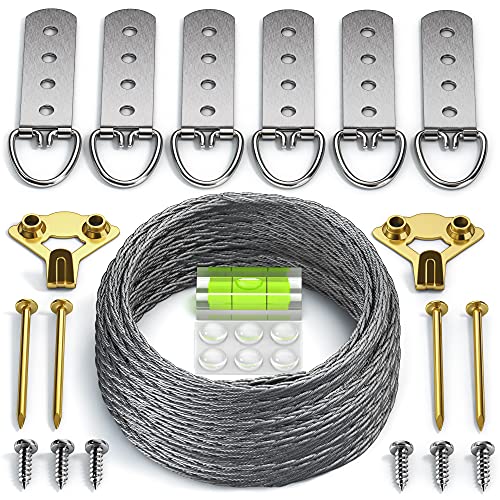
2Picture wire, D-rings and a level
LuckyBeeBo Heavy-Duty Picture Wire Kit
Gives a bare-backed mirror frame the wire or D-rings a Claw needs, and includes a level for the last step.

Sources
- 3M: 3M CLAW 65 lb. Drywall Picture Hanger With Spot Markers (3M United States) Hardened steel claws lock into drywall, no anchors or studs, rated 65 lbs per hanger on this listing, includes spot markers, reusable, removed with a flathead screwdriver, for use on drywall only.
Keep reading: How to hang a heavy mirror · How to hang a mirror without hooks · How to hang a mirror on a door · Best decorative mirrors · Best full-length floor mirrors
The MirroRank letter
New mirror picks, sizing and lighting tips from Joan, about once a month.