Mirror guide
How to Stop a Bathroom Mirror Fogging
 By Joan Bardot · Updated 4 sources cited
As an Amazon Associate I earn from qualifying purchases. How I choose products.
On this page
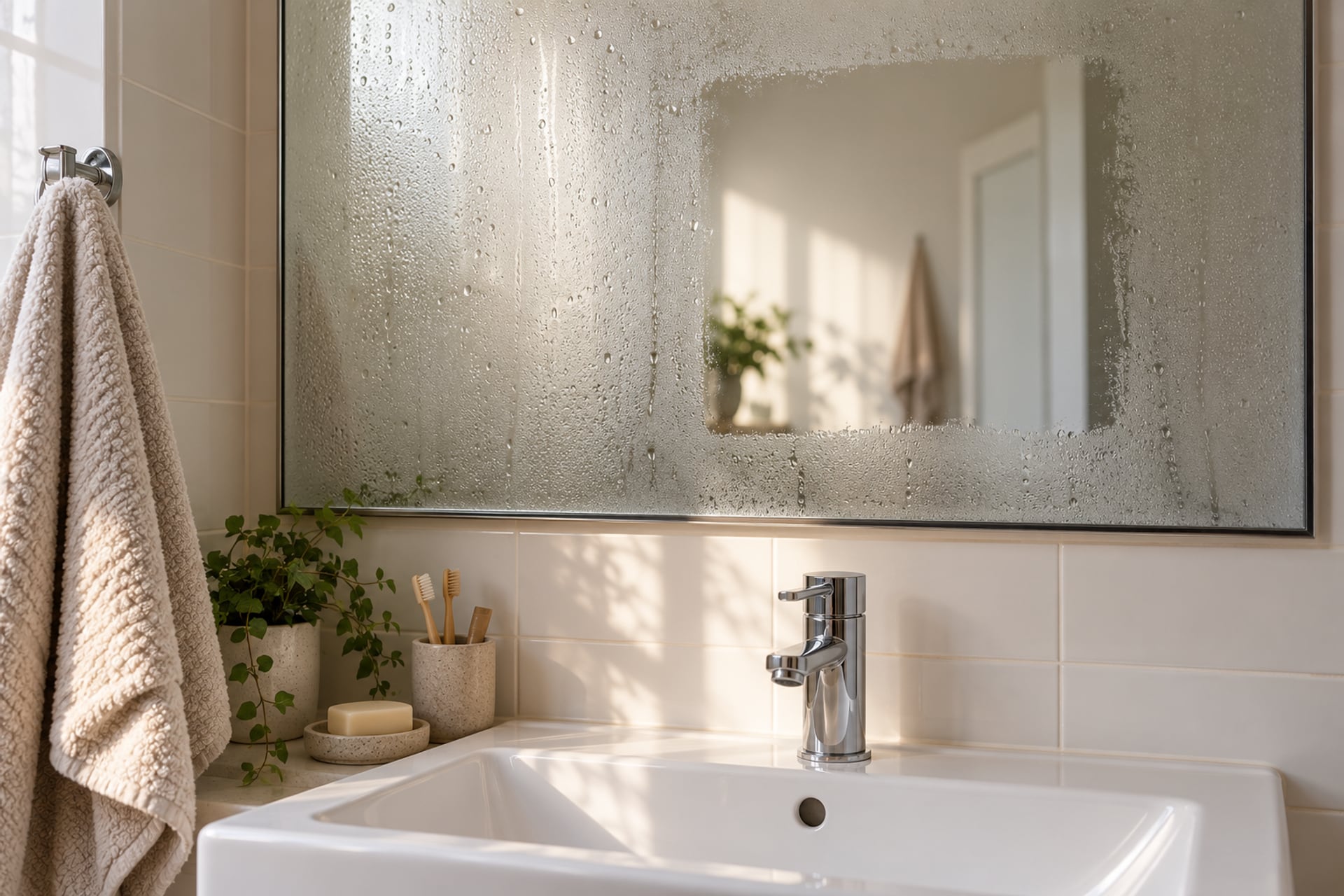
If you want to stop a bathroom mirror fogging, the good news is that the cheapest fixes work on the cause, and you can try them in order until the mirror stays clear. Fog is just water vapor turning into droplets on cold glass. Remove the vapor, coat the glass so droplets spread flat, or keep the glass warm, and the fog goes.
Below I explain why a bathroom mirror fogs, then go through the free fixes, the anti-fog treatments (including the shaving foam trick and how long treatments last), and the mirrors that fog less on their own: heated pads, LED mirrors with defoggers and coated glass. For a mirror that fogs and also shows a handprint, my guide to the handprint on the mirror after a shower explains that side of it.
Why Bathroom Mirrors Fog
A hot shower fills the room with water vapor. The dew point is the temperature at which air holding that much moisture is saturated, and when moist air touches a surface cooler than its dew point, the vapor condenses on it as liquid water. A bathroom mirror is a sheet of glass hanging on an outside-facing wall or tile, so it is usually one of the coolest surfaces in the room. It collects a layer of tiny droplets, and the droplets scatter light, which is why the glass turns white.
That gives you three ways to stop it: lower the humidity so the dew point drops, change the glass surface so droplets spread into a clear film, or warm the glass above the dew point. Every fix below does one of the three. The same physics is why a greasy print shows up in the steam, because oil changes how droplets form; the handprint guide goes through that, and it is also why a clean mirror is the starting point for any treatment.
Free Fixes: Start Here
These cost nothing, and they also protect the bathroom itself. Moisture that stays in the room ends up on paint, grout and the edges of the mirror.
Run the Fan During and for 15 Minutes After
ENERGY STAR's low-cost tips say to control bathroom humidity by running the ventilating fan "during and 15 minutes after showers and baths". Turn it on before you step in, not after the mirror has already clouded. The US EPA's remodeling guidance adds that ASHRAE recommends bathrooms exhaust 25 cubic feet per minute with a continuously operating fan, or 50 cfm with a fan you turn on and off as needed. If your fan is weak, noisy or vents into the attic, it will do less than you expect; that is worth fixing before you spend money on the mirror.
Open the Door or a Window
If the fan is small or missing, let the steam out another way. Opening the door a few inches during the shower, or cracking a window, lets moist air leave before it reaches the mirror. A cooler, drier room also lowers the dew point, so the glass has less to condense. The trade-off is a colder bathroom, and a door left open only helps if the rest of the house is drier than the bathroom.
Wipe and Squeegee the Glass
Once a mirror has fogged, a quick pass with a squeegee or a clean, dry microfiber cloth clears it for a minute or two, and it removes the water before it runs to the edges. I prefer a well-wrung microfiber cloth; keep one spare so you never rub oil back onto the glass. Stay gentle: the National Glass Association's mirror care bulletin FB06-05 says no abrasive cleaners should ever be used on any mirror surface, and that mirror cleaners containing ammonia or vinegar should be avoided. Warm water on a soft cloth is the safe default, and my streak-free cleaning routine covers it in full.
Anti-Fog Treatments
If ventilation isn't enough, or you can't change the room, treat the glass. Treatments don't remove the moisture. They change what happens to it.
Anti-Fog Sprays
Anti-fog sprays and wipes leave a thin coating on the glass. On untreated glass, vapor condenses as countless tiny beads that scatter light. The coating makes the water spread into a smooth, transparent film instead, so you can still see through it. For the best result, clean the mirror first, apply the product to a clean cloth or the glass as the label says, and buff until there are no streaks. Apply to the face of the glass only and wipe off any excess, because overapplied product can leave a slight haze. I list a spray in the kit below.
Shaving Foam and Soap Hacks
The best-known home version is to rub a little shaving foam or a bar of soap over the glass, then buff it clear. The idea is the same as a commercial spray: leave a very thin film that stops droplets beading up. People swear by it, and it may help for a shower or two.
I would treat it as a stopgap. Foam and soap leave a residue that is hard to apply evenly, and an uneven film is exactly what makes fog patchy and shows streaks, the same effect that makes a greasy print visible. Soap film is also one more thing to clean off later. If you try it, use a small amount, buff it fully, and clean the mirror with warm water before you switch to a proper product. How long it lasts depends on how thinly you apply it and how often you wipe the glass.
How Long Does a Treatment Last?
Not long. Any coating on the face of a mirror gets wiped off by cleaning and rubbed away by steam and splashes, so plan on reapplying. Product directions are the best guide to timing, and the honest summary is that sprays last days to weeks depending on use, while a fan or a heated mirror works every day without any reapplying. Always re-clean before you re-treat. Buildup of old coating is a common reason a mirror ends up cloudy, and I'd rather you remove it than stack a new layer on top.
Steam-Proof vs Anti-Fog Mirror
People search for a steam-proof mirror when sprays and fans haven't worked. The honest answer is that no mirror is truly steam-proof, because steam is a property of the air, not the glass. What exists are mirrors that stay clear by keeping the glass warm, or by changing how water sits on the surface. The three types below differ in how they work, and that decides which one suits you.
| Option | How it stops fog | Needs power | Needs reapplying | Best for |
|---|---|---|---|---|
| Anti-fog spray | Coating spreads condensation into a clear film | No | Yes | Renters and quick fixes |
| Heated defogger pad | Warms the glass above the dew point so vapor can't condense | Yes, wired in | No | Existing mirrors being remodeled |
| LED mirror with defogger | Built-in heating element does the same job | Yes, with the mirror | No | Replacing the mirror anyway |
| Coated or treated glass | Surface treatment changes how water beads | No | Depends on the product | Fogless mirrors for the shower |
Heated Defogger Pads
A defogger pad is a thin electric heating element that sticks to the back of a mirror. Wired to the light circuit or a switch, it warms the glass a few degrees, and a mirror that stays above the dew point can't collect condensation. It is the most reliable fix for a mirror you want to keep, and it needs a power connection, so this is a job for a competent DIYer or an electrician. Check that the pad is rated for the size of your mirror and for use in a bathroom, and follow the maker's directions for adhesive and wiring. Buy from a seller with clear sizing and wiring instructions, and match the pad to your mirror.
LED Mirrors With a Built-In Defogger
Many lighted bathroom mirrors include the heating pad from the factory, usually with a button or a switch that turns it on with the light. If you are replacing the mirror anyway, this is the easiest route: no pad to fit, and the manufacturer has sized the element to the glass. Check the product description for "defogger" or "anti-fog", because not every LED mirror includes one. My picks for the best LED bathroom mirrors note which ones do, and if you are fitting one yourself, my guide to installing an LED bathroom mirror walks through the wiring and mounting.
Coated Glass
Some mirrors, mostly sold for shower use, have a factory coating or treatment that stops water beading. The principle matches a spray, applied at the factory, and some are designed to be wiped with a clean cloth rather than recoated. Because coatings differ, read the care instructions and avoid abrasive cleaners, which the NGA says should never be used on any mirror surface. A coated mirror is also easier to live with if you don't want to run wires or reapply anything.
Fogless Mirrors for the Shower
If you shave or do your brows in the shower, the fan and the spray won't help much, because the steam is at its thickest right where you need to see. A fogless shower mirror is made for that spot, with a hanger or a suction mount and a surface designed to resist fog. I compare the main types, and my picks, in the best shaving mirrors guide.
A Simple Order to Try Things In
Step 1: Clean and Ventilate
Clean the mirror properly, then run the fan before, during and for 15 minutes after the shower. Do this for a week. If the mirror still clouds, move on.
Step 2: Treat the Glass
Add an anti-fog spray to the clean glass and reapply when it stops working. It is the cheapest next step and needs no tools.
Step 3: Keep the Glass Warm
If you don't want to keep reapplying, fit a defogger pad or choose an LED mirror with a built-in defogger. After that, the mirror stays clear every day without help from you.
A Note on Heat and Moisture
Fog is a symptom of moisture, and moisture at a mirror's edges does more harm than a cloudy surface. The NGA warns that liquid reaching a mirror's edges and backing causes "black edge", corrosion of the silver, and my mirror desilvering guide shows what that looks like. Drying the edges after showers matters as much as clearing the glass. Heated mirrors made for bathrooms are designed for this, but don't improvise heat sources next to a mirror.
What You Need
Two inexpensive items for the first two steps: treat the glass, and clean it without spreading oil.
-
1Anti-fog spray
MIRRORVANA Anti Fog Spray, 2 Bottles
An anti-fog spray sold for bathroom and shower mirrors; apply it to clean glass and buff so the mirror stays see-through after a shower.
-
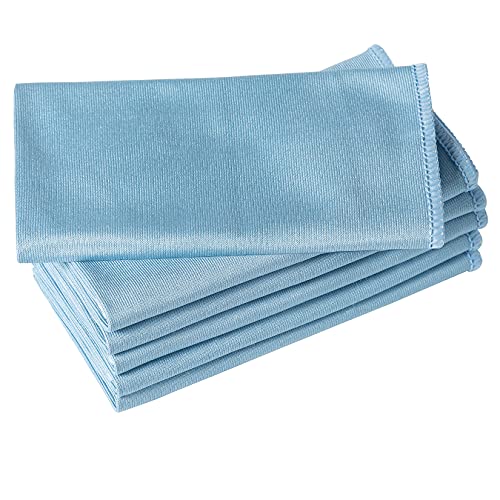
2Microfiber cloths
Puomue Microfiber Glass Cleaning Cloths, 6 Pack
Lint-free cloths: one damp to clean the glass before treating it, one dry to buff, with spares so you never rub oil back on.

Sources
- ENERGY STAR: Low- to No-Cost Tips for Saving Energy at Home Control bathroom humidity by running the ventilating fan during and 15 minutes after showers and baths.
- US EPA: Remodeling Your Home and Indoor Air Quality ASHRAE recommends exhausting bathrooms at 25 cfm with a continuous fan, or 50 cfm with a fan turned on and off as needed.
- Wikipedia: Dew point Condensation forms when air meets a surface cooler than its dew point.
- National Glass Association: Proper Procedures for Cleaning Flat Glass Mirrors (FB06-05, 2019) No abrasive cleaners on any mirror surface; no mirror cleaners containing ammonia or vinegar; keep mirrors away from high heat sources such as steam pipes before installation; wet edges cause black edge.
Keep reading: Handprint on the mirror after a shower · Best LED bathroom mirrors · Best shaving mirrors · How to clean a mirror without streaks · How to install an LED bathroom mirror
The MirroRank letter
New mirror picks, sizing and lighting tips from Joan, about once a month.