

As an Amazon Associate I earn from qualifying purchases. All claims are strictly my personal opinion.
Redecorating a bathroom is one of those genuinely exciting projects — and choosing the right mirror is often the single decision that makes or breaks the whole look. It sounds like a small detail, but the size, shape, and placement of your bathroom mirror can completely transform how spacious, bright, and polished the room feels. I’ve spent a lot of time thinking about this, and I want to walk you through everything you need to know before you hang anything on that wall. If you enjoy this kind of practical home design advice, be sure to check out the Blog for more mirror guides and decorating tips.
⚡ Key Takeaways
- A bathroom mirror should generally be 2 to 4 inches narrower than your vanity or sink on each side for a clean, balanced look — but going wider is possible when you have extra wall space.
- A larger mirror does more than look dramatic — it makes a small bathroom feel deeper and better lit by reflecting both natural and artificial light around the room.
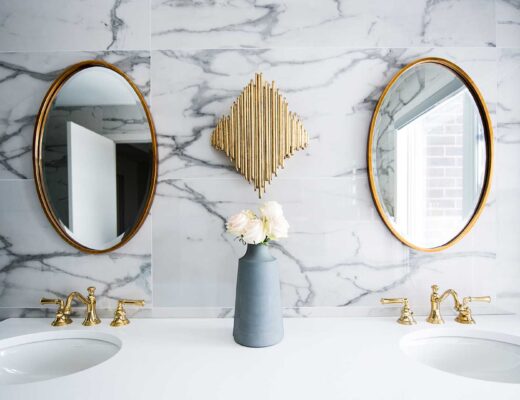
- For double-sink vanities, you can choose one long mirror or two separate mirrors centered over each sink — both approaches work beautifully when sized correctly.
- Mirror care matters: avoid harsh cleaners, dry immediately after wiping, and keep positioning in mind so you’re not accidentally reflecting cluttered areas or exposed wiring.
Should Your Bathroom Mirror Be Bigger Than the Sink?
This is one of the most common questions I hear, and the honest answer is: it depends on what you want to achieve. Both options — a mirror matched closely to your sink width and a mirror that extends beyond it — can look stunning when executed thoughtfully.
The Case for a Mirror That Matches the Sink Width
Keeping your mirror close to the width of your sink basin gives the vanity area a neat, intentional, and well-proportioned feel. According to LED Mirror World, the general rule of thumb is to keep your mirror a few inches narrower than the full vanity unit itself — this creates a “connected” look where the mirror feels anchored to the sink rather than floating awkwardly on the wall.
This approach works especially well in compact bathrooms where wall space is limited and you want a clean, uncluttered aesthetic. A frameless mirror sized close to the sink basin keeps the eye moving smoothly through the room without overwhelming the space.
The Case for a Mirror That’s Wider Than the Sink
Going wider — letting the mirror extend beyond the sink on either side — is a bold, dramatic choice that can elevate the entire room. As Edward Martin notes, a mirror that extends beyond the sink’s width can add real visual drama, as long as it integrates well with the rest of the room’s design.
The practical benefits are just as compelling as the aesthetic ones. A larger mirror reflects more light around the room — bouncing both natural window light and your vanity lighting — making even a windowless bathroom feel brighter and more open. This is particularly valuable in small bathrooms where you want to create a sense of depth.
ℹ️ Did You Know?
A large mirror in a small bathroom does double duty: it serves as a functional grooming tool and acts as a design element that visually doubles the room’s perceived size by reflecting the space back at you.
The Right Rule to Follow: The 2-to-4-Inch Buffer
Whatever width you choose, the most important sizing rule is the 2-to-4-inch buffer. According to Wiss Now, whether you’re centering one long mirror over a double vanity or positioning a single mirror over a solo sink, you should always maintain a 2 to 4-inch gap between the edge of the mirror and the edge of the vanity or any adjacent wall fixture. This buffer is what gives the composition a finished, intentional look rather than a squeezed-in afterthought.
For a deeper dive into bathroom mirror sizing rules, I’ve covered the full width-and-height calculation in a dedicated guide — it’s worth a read before you measure your wall.
One Mirror or Two? Navigating Double-Sink Vanities
If you have a double-sink vanity, you face an additional choice: go with one long, continuous mirror that spans the whole vanity, or hang two separate mirrors — one centered over each sink.
Signature Glass & Windows puts it well: a single large mirror creates a spacious, seamless look and is often easier to clean, while two smaller mirrors give the space a more customized and personalized feel, effectively giving each person their own zone.
💡 Pro Tip
If you go with two separate mirrors on a double vanity, treat each mirror as its own composition — center it over its individual sink and apply the 2-to-4-inch buffer rule independently to each one. Matching frames or identical styles will keep the look cohesive even across two separate pieces.
How Mirror Size Interacts With Bathroom Style
The size of your mirror doesn’t exist in a vacuum — it has to play nicely with your overall bathroom aesthetic. Here’s how to think about it based on the look you’re going for:
- Minimalist or Scandinavian style: Lean toward clean-lined frameless mirrors or thin metal frames in matte black or brushed nickel. Keep the mirror proportional and let the negative space around it breathe.
- Classic or traditional style: A beveled mirror with an ornate or wooden frame adds warmth and visual weight. Going slightly larger here reads as intentional rather than excessive.
- Rustic or farmhouse style: Distressed wood frames and arched shapes work beautifully. A wider mirror with a chunky frame anchors the vanity and gives the space character.
- Contemporary or glam style: This is where you can push the mirror size further — a floor-to-ceiling or extra-wide backlit mirror becomes the statement piece of the entire room.
The decorative effect becomes even more powerful when the mirror features a worked or beveled finish, or is paired with a well-chosen frame. These details allow a single mirror to carry the visual identity of the whole space — moving the mood from spa-like and serene to bold and dramatic depending on your choices.
Important Care Tips to Keep Your Mirror Looking Perfect
Owning a beautiful bathroom mirror means committing to a little maintenance. The good news is that the right habits take almost no time at all.
Placement Considerations Before You Hang
Before you commit to a position on the wall, think carefully about what your mirror will reflect. In a small bathroom, a poorly placed mirror can accidentally double the visual clutter — reflecting a messy corner, a toilet, or exposed plumbing rather than enhancing the room. Spend a few minutes standing where the mirror will go and holding up a piece of cardboard at that height to simulate the reflection angle.
Also, avoid mounting a mirror directly behind electrical outlets or exposed wiring. Beyond the aesthetic issue of visible cables appearing in your reflection, it’s simply safer and cleaner to keep mirrors away from that zone of the wall.
⚠️ Important
In a small bathroom with a large mirror, less is more with the surrounding decor. Too many accessories, shelves, or wall hangings around a large mirror will overwhelm the space and cancel out the depth effect the mirror is meant to create. Keep it simple.
Cleaning Your Bathroom Mirror the Right Way
Bathroom mirrors sit in a humid, splash-prone environment, which means they need regular wiping — but the wrong products can cause lasting damage. Here’s what I recommend:
- Use a soft, damp microfiber cloth to remove dust, water spots, and product splatter. Microfiber lifts residue without scratching the surface.
- Avoid applying soap or detergent directly to the glass. Harsh cleaners can damage the mirror’s coating or seep behind the edges and degrade the silver backing over time.
- Dry immediately after wiping with a clean, dry cloth or paper towel. Letting moisture sit on the glass surface is the primary cause of those cloudy water stains that are so hard to remove later.
- For stubborn streaks, a spray of diluted white vinegar on a soft cloth works exceptionally well — and it won’t harm the mirror’s backing the way chemical-heavy products can.
The Potato Trick for Steam Prevention
If your mirror fogs up the moment you take a shower, there’s a surprisingly effective old-school trick: cut a potato in half and rub the cut side over the mirror surface, then buff lightly with a dry cloth. The starch and proteins in the potato leave an invisible residue that disrupts how water vapor clings to the glass — significantly reducing fogging. It sounds unusual, I know, but it genuinely works and is completely safe on glass surfaces.
💡 Pro Tip
If you want a permanent solution to bathroom mirror fog, consider upgrading to a mirror with a built-in anti-fog heating pad. These are especially useful in bathrooms that get heavy steam, and they require virtually zero maintenance compared to DIY methods.
Let Your Style Lead — But Get the Sizing Right First
When it comes to the final look of your bathroom, personal taste absolutely should guide your decisions. A Scandinavian-style bathroom with slim iron-framed mirrors and muted tones can be just as striking as a glamorous space dominated by a floor-to-ceiling backlit panel. Neither is wrong — they’re just different stories told with the same object.
What I’d encourage you to resist is the temptation to skip the measuring step in favor of buying “whatever looks good” at the store. A mirror that’s even slightly too large or too small for your vanity width can make the whole composition feel off — and that’s a frustrating (and costly) mistake to correct after the fact.
If you’re also exploring options for other rooms, my guide on where to place floor mirrors in a bedroom covers a completely different but equally satisfying set of decisions. Mirrors really are one of the most versatile tools in your decorating toolkit.
✨ The Bottom Line
A bathroom mirror can absolutely be bigger than your sink — in fact, going wider often creates a more dramatic, light-filled, and sophisticated space. The key is to apply the 2-to-4-inch buffer rule, think carefully about what the mirror will reflect, and choose a style that genuinely complements the rest of your decor. Start by measuring your vanity width, decide between one mirror or two, and then let your personal aesthetic do the rest.
❓ Frequently Asked Questions
Can a bathroom mirror be wider than the vanity?+
How far should a bathroom mirror hang above the sink?+
Is it better to have one large mirror or two smaller mirrors over a double sink?+
Can you cut a bathroom mirror to a custom size?+
How do I stop my bathroom mirror from fogging up after a shower?+
Conclusion
The right bathroom mirror is one of those design decisions that rewards a little extra thought. Size your mirror with the 2-to-4-inch buffer in mind, consider the full reflective effect in your specific space, and choose a frame and finish that feels genuinely true to the style you’re building. A well-chosen mirror doesn’t just help you get ready in the morning — it shapes how the entire bathroom feels every time you walk in.
My suggestion? Start with your measurements before you fall in love with anything at the store. Know your vanity width, measure your available wall height, and note what’s around the mirror zone — outlets, light fixtures, tile patterns. Then shop with confidence. When you’ve got the numbers locked in, the fun part of choosing a style becomes a lot easier and a lot less likely to result in a costly return.



No Comments