
As an Amazon Associate I earn from qualifying purchases. All claims are strictly my personal opinion.
Makeup is so much more than a daily routine — it’s a genuine art form, a way to express your personality, and honestly, one of the most satisfying forms of self-care there is. But even the most skilled technique can fall short when you’re working with a mirror that doesn’t give you the close-up detail you actually need. That’s where a magnifying makeup mirror becomes a total game-changer. Whether you’re perfecting a sharp eyeliner wing or blending out a brow, the right mirror makes all the difference. Over on the Blog, I cover everything mirror-related, and today I’m breaking down exactly what magnifying mirrors are, how they work, and how to find the one that’s truly right for you.
⚡ Key Takeaways
- Magnifying mirrors range from 2x to 15x magnification — most everyday users find 5x the sweet spot for detailed makeup without distorting the full-face view.
- The concave surface of a magnifying mirror concentrates light beams toward a focal point, which is what creates the magnified image — not a lens or digital trick.
- Higher magnification (10x–15x) dramatically narrows your field of view, making it a specialist tool best used for precise tasks like tweezing or lash application, not full-face makeup.
- Features like adjustable LED lighting, dual-sided panels, and flexible mounting options can significantly expand a mirror’s usefulness across your entire makeup routine.
What Is a Magnifying Mirror?
A magnifying mirror — most commonly known as a makeup mirror — is designed to give you an enlarged, highly detailed view of your face so you can see every fine line, pore, and lash with total clarity. Even if your eyesight is perfectly fine, the enhanced view makes precision work dramatically easier and more accurate.
According to Conair, magnifying mirrors come with magnification levels ranging from 2x to over 10x, each suited to different tasks and different users. What used to be a luxury item reserved for professional makeup artists is now widely accessible — the market has expanded enormously, with options available at every budget level and in every style imaginable.
ℹ️ Did You Know?
A flat, standard bathroom mirror is technically rated at 1x magnification. Any magnifying mirror starts at 2x — meaning your reflection appears twice as large as it would in a regular mirror.
Today’s models are incredibly versatile. Many feature dual-sided designs with two different magnification levels on each side, so you can switch between a wide-angle view for overall blending and a close-up view for detailed work — all without picking up a second mirror.
How Do Magnifying Mirrors Actually Work?
%22%2F%3E%3Cline%20x1%3D%22200%22%20y1%3D%22105%22%20x2%3D%22100%22%20y2%3D%22100%22%20stroke%3D%22%231e293b%22%20stroke-width%3D%221.5%22%20marker-end%3D%22url(%23arr)%22%2F%3E%3Cline%20x1%3D%22200%22%20y1%3D%22130%22%20x2%3D%2292%22%20y2%3D%22130%22%20stroke%3D%22%231e293b%22%20stroke-width%3D%221.5%22%20marker-end%3D%22url(%23arr)%22%2F%3E%3Cline%20x1%3D%22200%22%20y1%3D%22155%22%20x2%3D%22100%22%20y2%3D%22160%22%20stroke%3D%22%231e293b%22%20stroke-width%3D%221.5%22%20marker-end%3D%22url(%23arr)%22%2F%3E%3Cline%20x1%3D%22200%22%20y1%3D%22190%22%20x2%3D%22100%22%20y2%3D%22190%22%20stroke%3D%22%231e293b%22%20stroke-width%3D%221.5%22%20marker-end%3D%22url(%23arr)%22%2F%3E%3Cline%20x1%3D%22100%22%20y1%3D%2270%22%20x2%3D%22280%22%20y2%3D%22130%22%20stroke%3D%22%23475569%22%20stroke-width%3D%221%22%20stroke-dasharray%3D%224%2C3%22%20marker-end%3D%22url(%23arr)%22%2F%3E%3Cline%20x1%3D%22100%22%20y1%3D%22105%22%20x2%3D%22280%22%20y2%3D%22130%22%20stroke%3D%22%23475569%22%20stroke-width%3D%221%22%20stroke-dasharray%3D%224%2C3%22%20marker-end%3D%22url(%23arr)%22%2F%3E%3Cline%20x1%3D%2292%22%20y1%3D%22130%22%20x2%3D%22280%22%20y2%3D%22130%22%20stroke%3D%22%23475569%22%20stroke-width%3D%221%22%20stroke-dasharray%3D%224%2C3%22%20marker-end%3D%22url(%23arr)%22%2F%3E%3Cline%20x1%3D%22100%22%20y1%3D%22160%22%20x2%3D%22280%22%20y2%3D%22130%22%20stroke%3D%22%23475569%22%20stroke-width%3D%221%22%20stroke-dasharray%3D%224%2C3%22%20marker-end%3D%22url(%23arr)%22%2F%3E%3Cline%20x1%3D%22100%22%20y1%3D%22190%22%20x2%3D%22280%22%20y2%3D%22130%22%20stroke%3D%22%23475569%22%20stroke-width%3D%221%22%20stroke-dasharray%3D%224%2C3%22%20marker-end%3D%22url(%23arr)%22%2F%3E%3Ccircle%20cx%3D%22280%22%20cy%3D%22130%22%20r%3D%225%22%20fill%3D%22%23fef3c7%22%20stroke%3D%22%231e293b%22%20stroke-width%3D%221.5%22%2F%3E%3Ctext%20x%3D%22290%22%20y%3D%22122%22%3EFocal%3C%2Ftext%3E%3Ctext%20x%3D%22290%22%20y%3D%22138%22%3Epoint%3C%2Ftext%3E%3Ctext%20x%3D%22195%22%20y%3D%2255%22%3EReflected%3C%2Ftext%3E%3Ctext%20x%3D%22195%22%20y%3D%2269%22%3Erays%3C%2Ftext%3E%3Ctext%20x%3D%22195%22%20y%3D%22215%22%3EIncoming%20light%3C%2Ftext%3E%3C%2Fsvg%3E)
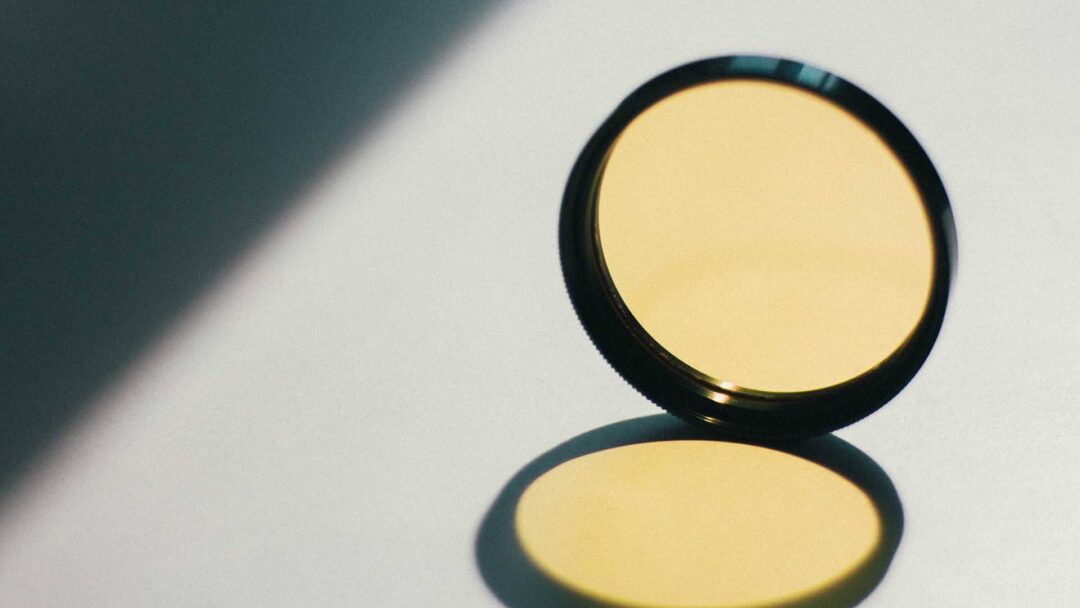
The science behind a magnifying mirror is elegantly simple. Unlike a flat bathroom mirror, the surface of a magnifying mirror is slightly concave — curved inward like the inside of a bowl. This concave shape causes light beams reflecting off your face to converge toward a single focal point, which is what creates the magnified image you see.
As Baci Mirrors explains, magnification power is rated based on how much larger the reflected image appears compared to the real object. A 1x mirror shows your face at true size; a 5x mirror makes it appear five times larger. Importantly, the further you position yourself from the mirror, the stronger the magnification effect becomes — up to the mirror’s rated limit.
This is also why very high-magnification mirrors (10x and above) produce such a tiny field of view. At those levels, you’re essentially looking at a close-up of just a few square centimetres of your face at a time — perfect for tweezing a single brow hair, but not practical for applying foundation. If you want to explore the optical science further, I have a dedicated post on Are Makeup Mirrors Concave or Convex that goes deeper into this topic.
💡 Pro Tip
When using a high-magnification mirror, always start with a lower magnification to get the overall shape right, then zoom in with the higher setting for final precision touches. This approach prevents the tunnel-vision effect that can throw off your symmetry.
How to Choose the Perfect Magnifying Mirror
Choosing the right magnifying mirror isn’t just about picking the highest magnification on the shelf. It comes down to three key factors: where you’ll use it, how much magnification you genuinely need, and which extra features will actually improve your routine. Here’s how to think through each one.
Structure and Placement
The very first question to ask yourself is: where will this mirror live? Your answer determines the ideal structure, size, and mounting style before you ever think about magnification levels.
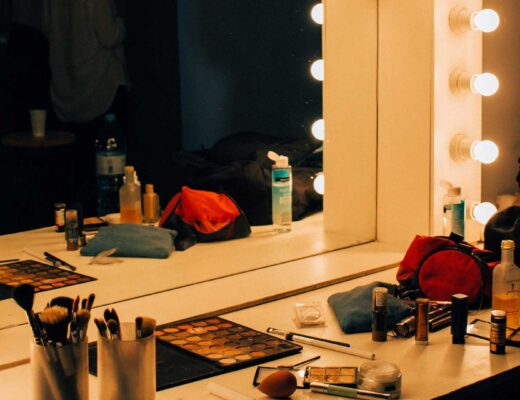
- Wall-mounted mirrors are great for dedicated vanity areas or bathrooms — they stay at a fixed height, free up counter space, and tend to have a cleaner, more permanent look. If you’re curious about optimal positioning, my guide on What is the Standard Vanity Mirror Height is a helpful starting point.
- Countertop or tabletop mirrors with a stand are the most popular choice for bedroom vanities. They’re adjustable, portable within your home, and come in an enormous variety of styles.
- Travel or compact mirrors fold flat or come in a small case, making them ideal for on-the-go touch-ups or for anyone with limited space.
Once you know the placement, consider the arm or stand style. Some countertop mirrors sit on a fixed base; others have an articulated arm that lets you swing and tilt the mirror to any angle. If you apply makeup seated at a low vanity, an adjustable arm can save your neck and posture.
Choosing the Right Magnification Level
This is the decision most people agonize over — and it’s worth getting right, because the wrong magnification level will either leave you squinting for detail or make it impossible to see your whole face at once. According to Luna London’s expert breakdown, the choice really comes down to matching magnification to your eyesight, your working distance from the mirror, and the specific task at hand.
- 2x magnification: A subtle upgrade from a standard flat mirror. Ideal for those with excellent eyesight who just want a slightly sharper, more defined reflection for general touch-ups. A good entry point if you’ve never used a magnifying mirror before.
- 5x magnification: The most popular level among everyday makeup users — and for good reason. It provides genuine detail without shrinking your field of view to an uncomfortable degree. According to Luna London, 5x sits in the comfortable “daily detail zone” for most routines, making it ideal for contact lens wearers, brow shaping, and precise foundation blending. This is personally my most-recommended starting point for anyone who’s unsure where to begin.
- 7x–8x magnification: A step up for those who want extra precision for tasks like creating a sharp eyeliner flick or filling in sparse brows. Often found on the reverse side of a dual-sided mirror paired with a 1x or 5x panel.
- 10x magnification and above: As Luna London notes, this is a specialist tool — best used for short precision checks rather than full-face routines. The field of view at 10x is very narrow, which makes it fantastic for lash application or detailed brow work, but impractical for anything broader.
⚠️ Important
If you wear prescription glasses or have significant vision differences between your eyes, higher magnification can sometimes create distortion that makes makeup application harder, not easier. Start at 5x and only increase if you genuinely need more detail — more magnification is not always better.
Lighting and Additional Features
Beyond magnification, the lighting setup on a mirror is what separates a good everyday tool from a truly professional-grade one. Natural light is the gold standard for makeup application, but most of us don’t have a window positioned perfectly at our vanity. That’s where built-in lighting steps in.
- LED lighting is the current industry standard — it’s energy-efficient, long-lasting, and produces a clean, consistent light that closely mimics natural daylight. Many LED mirrors now offer adjustable color temperature settings so you can toggle between warm (for evening looks), cool (for daylight accuracy), and neutral tones.
- Dimmer controls let you adjust brightness to match your environment, which is especially useful if you apply makeup in a room with inconsistent natural light.
- Dual-sided designs give you two magnification levels in one mirror — typically a 1x standard panel on one side and a 5x or 10x panel on the other. This is an extremely practical feature for anyone who switches between tasks during their routine.
- Swivel and tilt functionality means you can angle the mirror precisely where you need it, reducing neck strain and giving you the most accurate angle for every step.
As Lumina Pro highlights, the enhanced visibility of a well-lit magnifying mirror allows you to spot fine details — like uneven blending or a patchy brow — that are genuinely difficult to catch in a standard bathroom mirror. That visibility translates directly into more polished, consistent results.
💡 Pro Tip
If you’re buying a lighted mirror, look for one with a color temperature in the 5,000–6,000 Kelvin range — that’s the daylight zone, and it’s the most accurate for checking how your makeup will look outdoors or in bright indoor settings.
Common Mistakes to Avoid When Using a Magnifying Mirror
Even the best mirror in the world won’t help you if you’re using it incorrectly. These are the most frequent mistakes I see — and they’re all easy to fix once you’re aware of them.
- Using only the high-magnification side for your entire routine. At 10x, your field of view is so narrow that you can easily lose track of symmetry. Always check your full face in a standard 1x or 2x mirror before you finish.
- Placing the mirror in a dimly lit corner. A magnifying mirror amplifies everything — including shadows and uneven lighting. Position it where light falls evenly on your face from the front, not from the side or above.
- Sitting too close or too far from the mirror. The ideal working distance varies by magnification level. For 5x, most users find a distance of roughly 20–30 centimetres comfortable. Experiment to find what feels sharpest for your eyesight.
- Ignoring smudges and fingerprints on the surface. A magnifying mirror amplifies smears just as much as it amplifies detail. Clean the surface regularly with a soft microfibre cloth and a gentle glass cleaner for the clearest possible reflection.
✨ The Bottom Line
A magnifying mirror is one of the most genuinely useful tools in any makeup routine — not a luxury, but a practical upgrade that makes every application more precise and more consistent. Start by identifying where you’ll use it and what tasks matter most to you, then choose your magnification level accordingly: 5x for most everyday routines, 10x only for specialist precision work. Add in good LED lighting and a flexible mounting style, and you’ll have a setup that makes your reflection work for you, every single morning.
❓ Frequently Asked Questions
What magnification is best for everyday makeup application?
+
Why does my face look distorted in a magnifying mirror?
+
Is LED lighting on a magnifying mirror really necessary?
+
Can I use a magnifying mirror if I wear glasses?
+
How do I clean a magnifying mirror without scratching it?
+
Conclusion
A magnifying mirror is one of those tools that, once you try it, you genuinely wonder how you managed without it. The concave surface, the amplified detail, the ability to see your lash line or brow arch with total clarity — it all adds up to a noticeably more polished result, every time you sit down at your vanity.
The most important things to take away: match your magnification level to the task (5x for daily use, higher levels only for specialist precision), choose a structure that fits your space and lifestyle, and invest in good lighting if your room doesn’t naturally provide it. These three decisions will narrow the field considerably and point you toward exactly the right mirror for your routine.
My suggestion? Start by mapping out where the mirror will live and what your most common makeup tasks are. Then use those answers as your shopping filter. If you’re ready to explore some standout options, my full roundup of the Best Makeup Mirrors 2026 is a great next stop — it covers lighted, magnifying, and wall-mounted styles across every budget level.


No Comments