
As an Amazon Associate I earn from qualifying purchases. All claims are strictly my personal opinion.
Decorating a living room can feel overwhelming — there are so many choices, so many styles, and so much space to fill. But here’s a little secret I’ve learned from years of obsessing over interiors: a well-placed floor mirror is one of the most transformative, versatile, and genuinely beautiful things you can add to any living room. It’s not just a reflective surface — it’s a design tool, a light amplifier, and a statement piece all rolled into one. If you’ve been browsing our Blog for decorating inspiration, this guide is exactly what you need to take your living room from “fine” to genuinely stunning.
⚡ Key Takeaways
- Oversized floor mirrors saw a 22% year-over-year sales increase in modern living spaces, according to market research from Accio — confirming they’re one of the most sought-after decor trends right now.
- Strategically placed floor mirrors can create the illusion of doubled floor space and significantly amplify natural light — especially powerful in rooms under 200 square feet.
- Most floor mirrors can be displayed both vertically and horizontally, giving you two completely different looks from a single purchase.
- Leaning a mirror toward a window — rather than facing a wall — maximizes light reflection and makes the biggest visual impact in a living room.
Why Floor Mirrors Belong in Your Living Room
I know what you might be thinking: mirrors are for bedrooms and bathrooms. But I’d gently push back on that. The living room is actually the ideal stage for a floor mirror — it has the wall space, the natural light sources, and the foot traffic to make a large mirror truly shine (pun intended).
According to Mercury Glass & Mirrors’ 2026 interior design trend report, floor-to-ceiling mirrors are especially popular for cramped entryways, bathrooms, and narrow corridors — but the same light-expanding logic applies just as powerfully to living rooms. A mirror positioned correctly can make a room feel like it has no borders at all.
ℹ️ Did You Know?
Research from Accio’s trending mirror market report found that oversized floor mirror sales grew 22% year-over-year, with modern living rooms being the most common placement. They’re not just trendy — they’re proving their staying power.
The Real Advantages of Using a Floor Mirror
Before I get into the creative placement ideas, I want to walk you through the core reasons why floor mirrors are such a smart investment for your living space. These aren’t just aesthetic perks — they’re genuinely practical benefits.
- Unmatched versatility: A floor mirror suits virtually any room — living room, bedroom, hallway, dining room. If you redecorate and change your living room’s vibe, the mirror moves with you. It’s one of the few decor pieces that truly never becomes obsolete. (Curious about other placements? I’ve written about How to Perfectly Place a Floor Mirror in Your Dining Room if you want to explore beyond the living room.)
- Space expansion and light amplification: This is the big one. Edward Martin’s design blog notes that flat floor mirrors amplify light and openness without bending lines — unlike convex mirrors, they give you a true, undistorted sense of expanded space. In smaller living rooms, this effect is genuinely remarkable.
- Accessible for most budgets: Unlike many statement decor pieces, floor mirrors are available across a wide range of price points. You don’t have to spend a fortune to get a mirror that looks like a million dollars in your room.
- Full-length functionality: Beyond pure decoration, a floor mirror gives you a proper head-to-toe view — something a small bathroom mirror simply can’t offer. It’s decorative and deeply practical.
- Architectural simulation: According to design experts at MirrorLot, floor-length mirrors can simulate architectural elements like windows or doorways, adding depth and visual interest to an otherwise flat wall.
Creative Ways to Use Floor Mirrors in Your Living Room
This is where it gets really fun. There’s no single “right” way to style a floor mirror in a living room — but there are several approaches that I’ve found consistently deliver stunning results. Here’s what I’d recommend exploring, depending on your space and your style.
Try Two Mirrors Instead of One
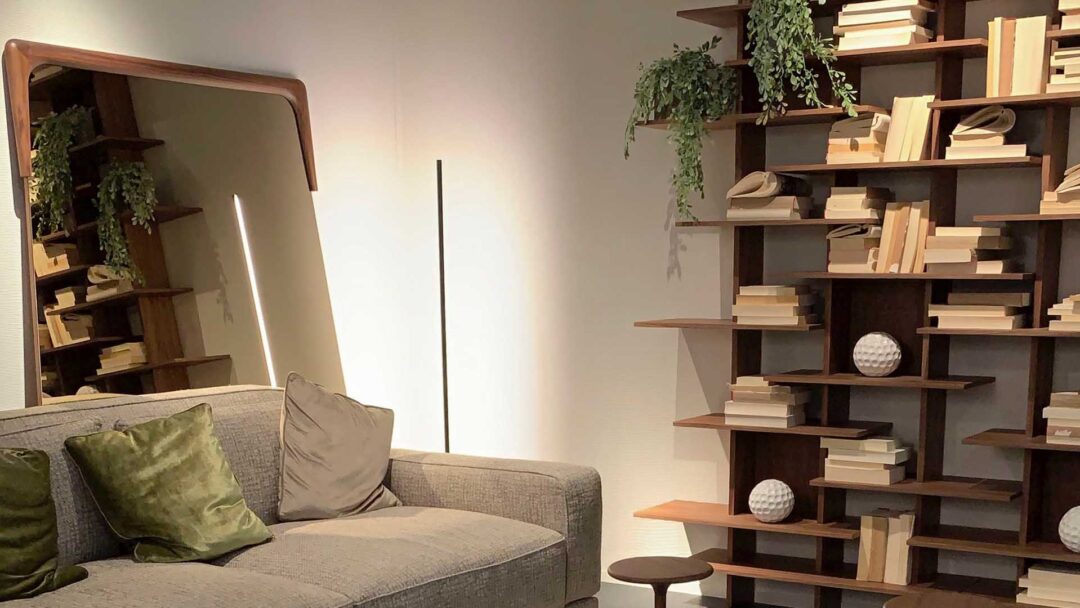
Living rooms typically offer generous wall space — so why stop at one mirror? A pair of floor mirrors creates a balanced, gallery-worthy look that feels intentional and curated rather than accidental. Place them symmetrically on either side of a sofa or fireplace for a formal, dramatic effect, or lean them at slightly different angles for something more relaxed and editorial. The double reflection also doubles the light-bouncing benefits.
💡 Pro Tip
When pairing two floor mirrors, match the frame finish but not necessarily the frame style. For example, two gold-framed mirrors — one arched, one rectangular — creates visual interest while still feeling cohesive. Identical twins can read as too rigid; complementary siblings feel more alive.
Lean It Toward a Window for Maximum Light
%22%2F%3E%3Ctext%20x%3D%2255%22%20y%3D%22135%22%20fill%3D%22%23b45309%22%3Elight%20in%3C%2Ftext%3E%3C!--%20Reflected%20ray%20into%20room%20--%3E%3Cline%20x1%3D%22135%22%20y1%3D%22170%22%20x2%3D%22300%22%20y2%3D%22130%22%20stroke%3D%22%23f59e0b%22%20stroke-width%3D%221.5%22%20stroke-dasharray%3D%225%2C3%22%20marker-end%3D%22url(%23arr)%22%2F%3E%3Ctext%20x%3D%22220%22%20y%3D%22120%22%20fill%3D%22%23b45309%22%3Ereflected%20light%3C%2Ftext%3E%3C!--%20Room%20interior%20label%20--%3E%3Crect%20x%3D%22200%22%20y%3D%22160%22%20width%3D%22140%22%20height%3D%2250%22%20rx%3D%224%22%20fill%3D%22%23fef3c7%22%20stroke%3D%22%23475569%22%20stroke-width%3D%221%22%2F%3E%3Ctext%20x%3D%22215%22%20y%3D%22180%22%3ERoom%20interior%3C%2Ftext%3E%3Ctext%20x%3D%22215%22%20y%3D%22196%22%3Ebrightened%3C%2Ftext%3E%3C%2Fsvg%3E)
Position matters as much as size. The single most impactful placement trick I know is to angle your floor mirror so it reflects a window or a primary light source. This bounces natural light deep into the room, making even a north-facing living room feel bright and airy. According to Homestyler’s living room mirror guide, this approach “amplifies natural light and creates an illusion of width” — but they also caution that it works best when the mirror reflects something attractive, not a cluttered corner.
Make sure the mirror is angled toward a visually appealing element — a window view, a beautiful piece of art, or a well-styled bookshelf. What the mirror reflects becomes part of your decor.
Go Big and Make a Statement
In a room with average or generous square footage, an oversized floor mirror is almost always the right call. A large mirror — think anything taller than five feet — fills vertical space confidently, anchors the room visually, and creates that coveted sense of endless depth. This aligns with what the market is telling us: oversized floor mirrors are having a genuine moment in 2026, and for very good reason.
If you’re nervous about going oversized, start by measuring your wall and mocking up the footprint with painter’s tape before committing. Most people find that the mirror needs to be bigger than they initially imagined to have the right visual weight.
Hang It Horizontally Over the Fireplace
Here’s one that surprises people every time: most floor mirrors can be mounted horizontally, completely transforming their visual impact. A vertically oriented mirror makes a room feel taller. A horizontally mounted floor mirror — hung above a fireplace mantle, for instance — makes a room feel wider and grounds the focal wall in a way that feels almost architectural.
Check the hardware on your mirror before attempting this. As Wirecutter notes in their full-length mirror reviews, many quality floor mirrors come with hanging hardware that supports both vertical and horizontal orientations — sometimes via a wall cleat system. Always use the included tip kit or anti-tip hardware if you’re leaning rather than mounting.
Complement Your Existing Glamour
If your living room already leans glam — think velvet sofas, gold accents, rich jewel tones — a floor mirror is the finishing touch that pulls the whole look together. Choose a frame that echoes your existing hardware: brushed brass, champagne gold, or antiqued silver all work beautifully in a maximalist space. A frameless mirror, by contrast, suits minimalist and contemporary interiors perfectly, letting the reflection do all the talking.
⚠️ Important
Never lean a large floor mirror against a wall without securing it — especially in homes with children or pets. Always use the anti-tip strap or wall anchor that comes with your mirror, or purchase one separately. An unsecured mirror can pose a serious safety risk if bumped.
Choosing the Right Mirror for Your Living Room
With so many styles available, narrowing down your choice can feel daunting. Here are the main factors I always consider when recommending a floor mirror for a living room setting.
Frame Style and Material
The frame is the personality of the mirror. A chunky reclaimed wood frame reads rustic and warm. A thin metal frame feels sleek and modern. An ornate gilded frame brings old-world drama. According to 2026 design trend forecasts, wood and natural material accents — including brass and travertine combinations — are particularly popular right now. When in doubt, match your frame’s undertone (warm or cool) to your existing furniture.
Proportions and Wall Size
A mirror that’s too small for the wall it’s on will look lost and visually underwhelming. A general rule I follow: the mirror should occupy roughly one-third to two-thirds of the wall’s width for balanced proportion. For tall ceilings, lean into a taller mirror — it will reinforce the architecture rather than fight it. For lower ceilings, a wider, horizontally oriented mirror helps avoid making the room feel even shorter.
Reflection Clarity
Not all mirrors reflect equally well. Look for mirrors with distortion-free glass — some budget options use thinner glass that introduces subtle warping, especially toward the edges. This matters more in a living room than you might think, because visitors will see the reflection from multiple angles. A high-quality mirror with true, clear reflection elevates the entire room. If shopping in person, hold your hand up to the mirror and move it slowly — any distortion in the reflection is a red flag.
✨ The Bottom Line
A floor mirror is one of the smartest, most versatile investments you can make for your living room — it expands space visually, amplifies light, and adds a layer of intentional style that almost nothing else can replicate at the same price point. Start by identifying your wall space and your room’s primary light source, then choose a frame style that complements your existing furniture. Even a single, well-placed floor mirror can completely change how a living room looks and feels.
❓ Frequently Asked Questions
Where is the best place to put a floor mirror in a living room?
+
Can a floor mirror make a small living room look bigger?
+
Should a floor mirror touch the floor or be elevated slightly?
+
Can I hang a floor mirror horizontally on the wall?
+
What frame style works best for a living room floor mirror?
+
Final Thoughts
If there’s one decorating move I keep coming back to — one that works in almost any living room, at almost any budget, in almost any style — it’s adding a floor mirror. The combination of visual impact, practical functionality, and design flexibility is nearly impossible to beat.
Start by measuring your intended wall space and identifying where your natural light comes from. Then choose a frame that feels like a natural extension of your existing decor, and don’t be afraid to go larger than feels comfortable at first — in my experience, the mirror almost always needs to be bigger than you expect. Position it thoughtfully, secure it safely, and then step back and enjoy just how different your living room looks and feels.
For more mirror placement ideas and buying guidance, explore the full range of content on our Blog — there’s a lot more to discover.



No Comments